
Written by: Matthew Timmins, Founder and Managing Director, Leva Sleep | Last updated: June 20, 2026
Key Takeaways
- Wedge pillows for acid reflux provide temporary elevation and often lose effectiveness on soft mattresses or when the sleeper shifts.
- Full upper-body elevation of 6–8 inches is medically recommended, yet most wedge pillows do not support the torso consistently or comfortably all night.
- Canadian couples face added challenges because a single wedge disrupts the shared sleep surface and cannot offer independent positioning for each partner.
- Adjustable beds deliver precise, motorized elevation that stays consistent, supports side sleeping, and lets each partner customize their angle without compromise.
- For a long-term, partner-friendly solution, explore Leva Sleep’s adjustable bed packages designed specifically for couples managing acid reflux.
The Problem: Why Wedge Pillows Fall Short for Nighttime Acid Reflux
GERD affects many Canadian adults, and the Canadian Digestive Health Foundation estimates that many Canadians experience GERD symptoms weekly. These symptoms disrupt sleep through waking, coughing, chest burning, and sour taste. Lying down worsens reflux because gravity no longer helps keep stomach contents in the stomach, so nighttime elevation becomes a front-line non-pharmacological intervention.
The medically recommended elevation is 6 to 8 inches (15–20 cm) of full upper-body support. A 2004 systematic review in Alimentary Pharmacology and Therapeutics examined lifestyle measures including head-of-bed elevation for gastro-oesophageal reflux disease. The 2026 BCMJ review on GERD management in primary care lists head-of-bed elevation among recommended lifestyle measures for nocturnal symptoms, alongside avoiding recumbency after meals for four hours.
Wedge pillows are the most accessible entry point for elevation therapy, but they carry documented structural limitations:
- On soft mattresses, wedge pillows sink and lose their intended elevation angle, which reduces effectiveness for consistent nighttime GERD relief.
- A wedge placed on top of the mattress can cause the sleeper to roll off during sleep, while placement under the mattress is more stable but limits repositioning.
- Wedge pillows are only effective if the sleeper maintains a back or left-side position throughout the entire night, a requirement that is difficult to guarantee.
- Elevating only the head instead of the entire upper body can increase abdominal compression and worsen GERD symptoms.
- A wedge must be at least 6 inches high, ideally 7–8 inches, and long enough to support the head, shoulders, and upper back. Shorter or improperly sized options fail to adequately elevate the esophagus.
- A wedge that is too narrow fails to support the sides of the back, causing the sleeper to lean or twist, which introduces shoulder and neck pain over time.
- For couples sharing a bed, a single wedge pillow addresses only one partner’s side and can physically disrupt the other partner’s sleep surface. Split king adjustable bases resolve this by providing independent head elevation for each partner.
When evaluating any wedge pillow, start by confirming it reaches at least 7 inches at its tallest point, the minimum for clinical effectiveness. Next, test whether the foam is firm enough to hold that height under your body weight, because compression cancels out the measured height. Then verify the wedge is wide and long enough to support your torso from waist to head, since elevating only the neck increases abdominal pressure. Finally, check whether it can maintain its angle on your specific mattress firmness, as soft mattresses cause wedges to sink. These connected criteria, height, firmness, coverage, and stability, determine whether a wedge will deliver clinically relevant elevation, not brand name or price alone.
The Solution: Adjustable Bed vs. Wedge Pillow for Acid Reflux
Adjustable beds allow precise angle control for the recommended elevation and can serve as a comfortable long-term solution for acid reflux patients who also have snoring or sleep apnea. Unlike a static wedge, a motorized adjustable base holds its position regardless of mattress firmness, does not shift during sleep, and can be fine-tuned without getting out of bed. Starting at a 30-degree head-end tilt and adjusting in 1-degree increments after a 15-minute settling period allows users to find their personal optimal angle. A static wedge cannot offer this level of precision.
For Canadian couples seeking this level of precision without the wedge pillow trade-offs, Leva Sleep’s adjustable bases translate these clinical requirements into a partner-compatible product. Whisper-quiet German-engineered motors raise and lower the head section silently, so mid-night micro-adjustments do not wake a partner. A dedicated pillow-tilt motor provides additional upper-neck support at elevation. The Leva Sleep app, with anti-snore micro-adjustment mode launching spring 2026, enables position changes from a phone without disturbing a sleeping partner.
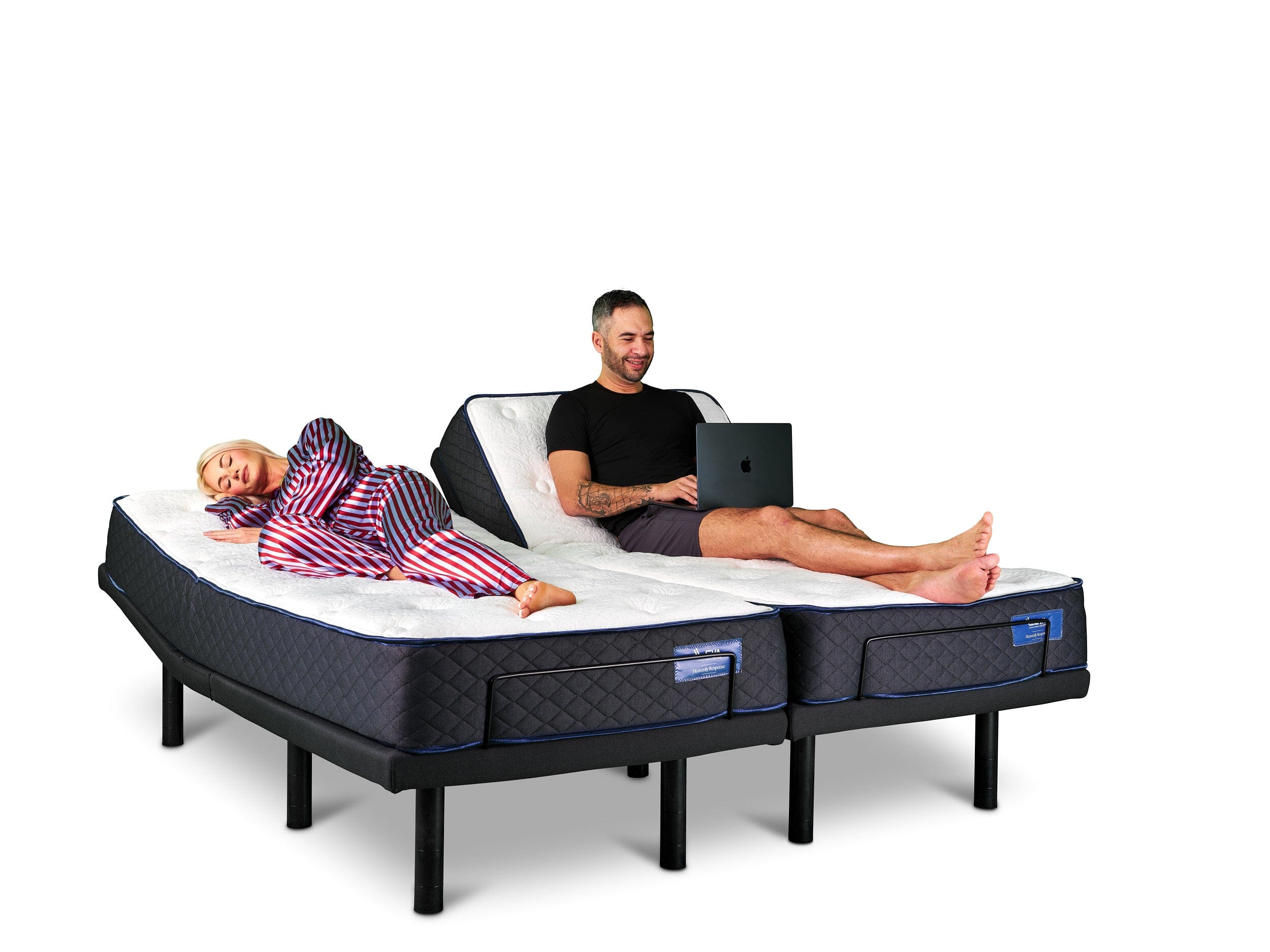
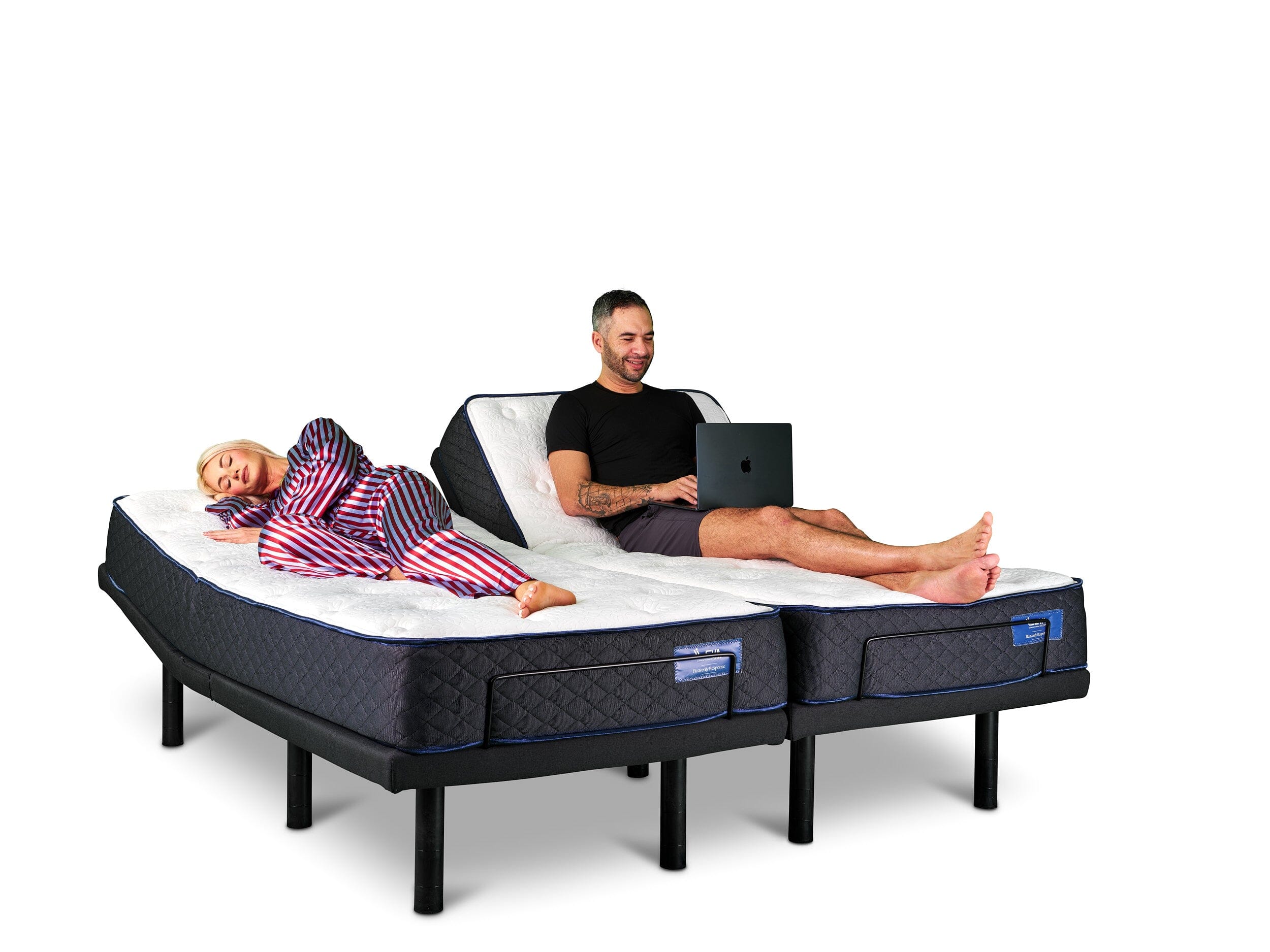
Leva’s Split Queen and Split King configurations give each partner a fully independent head section. The GERD sufferer can sleep at a higher angle while their partner sleeps flat or chooses a different position on the same bed in the same room. Leva also designs specialized fitted sheets with deep pockets and extra elastic, plus duvet clips, so bedding stays in place at elevation rather than bunching at the foot of the bed.
The table below shows how adjustable bases address each major wedge pillow limitation and why motorized elevation offers a more stable, couple-friendly approach to long-term GERD management.
| Criterion | Wedge Pillow | Leva Sleep Adjustable Base |
|---|---|---|
| Elevation consistency | Sinks on soft mattresses, angle degrades overnight | Motorized position held continuously, adjustable in 1-degree increments |
| Partner compatibility | Single-user, disrupts shared sleep surface | Split Queen and Split King with fully independent controls per side |
| Noise during adjustment | Silent (static) | Whisper-quiet German motors, near-silent repositioning |
| Long-term cost | Lower upfront, replacement needed as foam compresses | Higher upfront, 8-year track record, 30–50% below comparable luxury competitors |
| Setup experience | Self-managed, ongoing nightly adjustment required | Optional white-glove in-home delivery, assembly, and tutorial available in Ontario and Alberta |
Before committing to any elevation solution, wedge or adjustable base, use the checklist below to confirm that the product will deliver effective, partner-compatible relief based on clinical guidance.
Buyer’s checklist before purchasing any elevation solution for acid reflux:
- Does the product elevate the full torso from waist to head, not just the neck?
- Does it reach at least the recommended elevation and maintain that height under body weight?
- Can it accommodate left-side sleeping without causing the sleeper to roll off?
- Does it allow independent adjustment if a partner does not require elevation?
- Is the elevation angle adjustable to fine-tune symptom relief over time?
- Does the bedding system stay in place at the required incline?
The Benefits: How Leva Sleep Supports Couples Sharing a Bed
Leva Sleep has served 25,000+ customers over eight years, accumulating more than $50M in lifetime sales as a Canadian adjustable bed specialist. Its direct-to-consumer, vertically integrated model, with local design, in-house assembly, and no retail middlemen, positions its bases at 30–50% below comparable luxury competitors such as Tempur-Pedic adjustable systems. For couples in Ontario and Alberta, this pricing model provides access to a medically aligned elevation solution without the usual premium sleep technology cost barrier.
The split configuration is the defining advantage for couples where one partner has GERD. Each side of a Split Queen or Split King operates independently. One partner elevates to the recommended angle for reflux relief while the other remains flat or adjusts to their own preference, so neither partner compromises. Leva’s 15–20 adjustable base models, compared to the 3–5 typically found at general mattress retailers, mean there is a configuration suited to most room sizes and budgets.
White-glove delivery, available for a fee in Ontario and Alberta, includes bedroom setup, leg-height adjustment, a full product tutorial, and removal of the old bed. This service helps couples start with a correctly assembled, fully explained system on the first night, which matters when two independent motor systems and app controls are involved.
Frequently Asked Questions
What height of elevation is recommended for acid reflux relief during sleep?
The standard medical recommendation is 6 to 8 inches (approximately 15–20 cm) of full upper-body elevation, measured from the waist to the head. This elevation angle, roughly 30 to 45 degrees, positions the esophagus physically higher than the stomach, which makes it harder for acid to flow backward during sleep. Elevating only the head and neck without supporting the torso is not equivalent and can increase abdominal compression, potentially worsening symptoms. Minor elevation of 2 to 3 inches has been shown to produce minimal benefit. An adjustable base allows users to dial in their precise angle and modify it over time as symptoms change, which a static wedge pillow cannot do.
Are wedge pillows suitable for side sleepers with acid reflux?
Left-side sleeping is generally recommended for GERD patients because the anatomy of the stomach places the esophageal opening above the stomach contents in that position, which reduces upward acid flow. However, most wedge pillows are designed primarily for back sleeping. A narrow wedge used during side sleeping may not support the sides of the back adequately, causing the sleeper to lean or twist and creating shoulder and neck strain.
Some wider wedge designs accommodate side sleeping better, but the sleeper must remain in that position throughout the night for the elevation to remain effective, something that cannot be guaranteed. An adjustable base with a full-width head section maintains elevation regardless of whether the sleeper shifts position during the night.
What delivery options does Leva Sleep offer in Ontario and Alberta?
Leva Sleep offers white-glove in-home delivery as an optional service for customers in Ontario and Alberta. This service includes scheduled delivery directly to the bedroom, full assembly of the adjustable base and mattress, leg-height customization, a hands-on product tutorial covering app controls and preset positions, and removal of the existing bed, which is donated or recycled where possible. This service differs from standard “bed in a box” drop-ship models that leave assembly to the customer. For a product like a split adjustable base, which involves two independent motor systems, specialized bedding, and app pairing, professional setup helps ensure the system is functioning correctly from the first night of use.
Conclusion: Choosing a Lasting Elevation Solution
Wedge pillows provide an accessible starting point for nighttime acid reflux management, but their structural limitations, including foam compression, positional instability, single-user design, and lack of fine-tuned angle control, make them a short-term measure rather than a durable solution. For Canadian couples where one partner experiences GERD, the inability of a wedge to provide independent, consistent, full-torso elevation without disrupting the other partner creates a compatibility problem that no wedge design fully resolves.
Leva Sleep’s Split Queen and Split King adjustable bases address every documented wedge limitation through motorized elevation held at the clinically recommended angle, whisper-quiet operation, fully independent per-side controls, and specialized bedding engineered to stay in place at incline. With its established Canadian market presence and pricing model designed to reduce the cost barrier to medical-grade elevation, Leva Sleep offers an evidence-aligned, partner-compatible elevation solution for couples ready to move beyond temporary fixes.