
Written by: Matthew Timmins, Founder and Managing Director, Leva Sleep | Last updated: July 20, 2026
Key Takeaways
- Zipper duvet covers keep inserts from sliding when split adjustable beds move independently.
- Button and envelope closures leave gaps that let inserts escape and disturb couples’ sleep.
- Hidden, 3-sided, and full-perimeter zippers paired with corner ties or Leva Sleep duvet clips keep bedding stable on split bases.
- Breathable fabrics such as linen, bamboo viscose, and cotton percale help hot sleepers in Ontario and Alberta manage temperature swings.
- Shop Leva Sleep adjustable bed packages created for Canadian couples who want stable, integrated sleep systems.
The Problem: How Traditional Duvet Covers Fail on Split Adjustable Beds
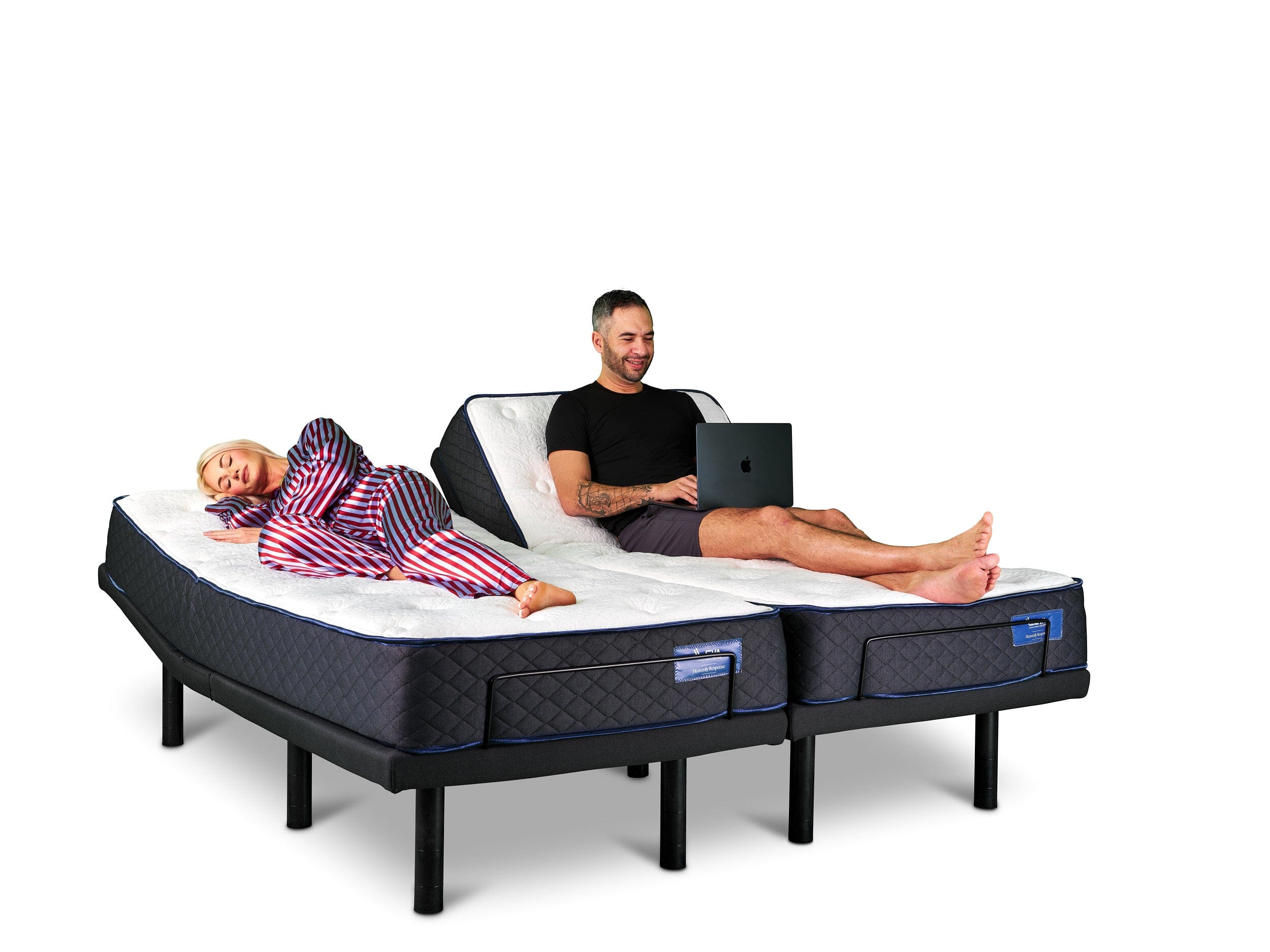
When an adjustable base raises the head section, gravity creates a shear force along the mattress surface that increases the sliding tendency of both the mattress and all bedding layers. On a split configuration with two independent bases pushed together, the issue becomes more noticeable. The bases can drift apart over time without a strap or connector, and fitted sheets can pop off the corners when the base moves.
Traditional button closures use six to eight buttons along the bottom edge, which leaves small gaps where the insert can escape, so the insert can slide out during the night, especially for restless sleepers. Envelope closures perform even worse. They are not recommended for king-sized duvet covers because the wider opening worsens the insert sliding-out problem. For couples in Ontario and Alberta who have invested in a split adjustable system, these design gaps quickly turn into disrupted sleep.
How Zipper Duvet Covers Keep Bedding Stable on Split Bases
Zipper closures solve insert migration by sealing all four sides, or at least the full bottom edge, of the cover. Hidden zipper closures rank highest for insert security because the insert cannot escape. When you pair a zipper closure with internal corner ties and a fitted sheet designed for adjustable bases, the duvet cover stays stable through repeated elevation cycles.
Leva Sleep designs bedding accessories specifically for adjustable bases and offers duvet clips that keep each partner’s insert separate when both sides move on their own. No standard off-the-shelf cover offers this type of insert separation. This integrated approach keeps every component of the sleep system working together instead of fighting the mechanics of the base.
Hidden vs. 3-Sided Zippers for Adjustable Beds
Hidden zipper closures run along the bottom edge inside a fabric flap and create a seal that keeps the insert from escaping while staying undetectable against the skin. They allow faster comforter insertion than buttons. High-heat drying cycles, however, can stress the zipper components on many budget covers, while button closures avoid zipper-failure risk entirely.
Three-sided zipper designs extend the closure along both short ends and the bottom. This layout sharply reduces the chance that the insert will shift toward one corner during independent adjustments. When you compare zipper quality, choose dual-head zippers with thick metal or reinforced plastic teeth. These survive frequent washing better than thin, single-head versions on budget covers.
Full-perimeter zippers such as QuickZip zip around all four sides and provide the most stable option for Canadian adult households.
Corner Ties vs. Leva Sleep Duvet Clips for Insert Security
Corner ties act as the internal retention system that supports the zipper closure. Quality covers include at least four corner ties, and premium versions add two more ties at the midpoints of the long edges to reduce migration on wider surfaces. Eight ties give extra security for very fluffy or slippery comforters and help prevent bunching during independent adjustments on split adjustable beds.
Corner ties work very well when both the cover and comforter have matching fabric tie strings and loops, but they fail when the comforter lacks loops. Leva Sleep’s duvet clips attach directly to the insert, even when it has no sewn-in loops. This design makes them a practical choice for couples using the Scandinavian two-duvet method, where each partner uses their own insert, on a split queen or split king base.
Fabric Choices for Hot Sleepers in Ontario and Alberta
For Ontario and Alberta couples on adjustable beds, fabric choice directly affects thermal comfort during independent adjustments. The climates differ significantly. Southern Ontario summers often reach 30°C with high humidity, while Alberta winters regularly drop well below freezing.
This variation has increased demand for breathable fabrics that help hot sleepers manage temperature differences. Washed linen, bamboo viscose, and textured weaves have become popular choices for duvet covers because they release heat more easily than dense synthetics.
Cotton percale at 200–400 thread count offers a crisp, cool, matte feel with strong breathability, which suits warm sleepers and summer months. Linen sleeps cooler than cotton and can reduce night sweats compared with standard cotton, so it works especially well for humid Southern Ontario summers. Bamboo viscose wicks moisture effectively and is naturally hypoallergenic, which makes it a strong year-round option.
For Alberta’s colder winters, cotton sateen at 300–600 thread count feels warmer and suits cooler bedroom conditions. Avoid microfibre. It traps more heat, wicks moisture poorly, and often creates the clammy feeling hot sleepers notice on warm nights.
Canadian Queen and Split Queen Sizing for Adjustable Beds
Standard Canadian Queen duvet covers measure 88–90 × 90 inches (225–229 × 229 cm) and standard King duvet covers measure 102 × 90 inches (260 × 229 cm), with some oversized King options reaching 106 inches wide. Duvet and duvet cover sizes vary by brand and manufacturer, so measuring the mattress rather than relying on size names alone helps ensure proper coverage.
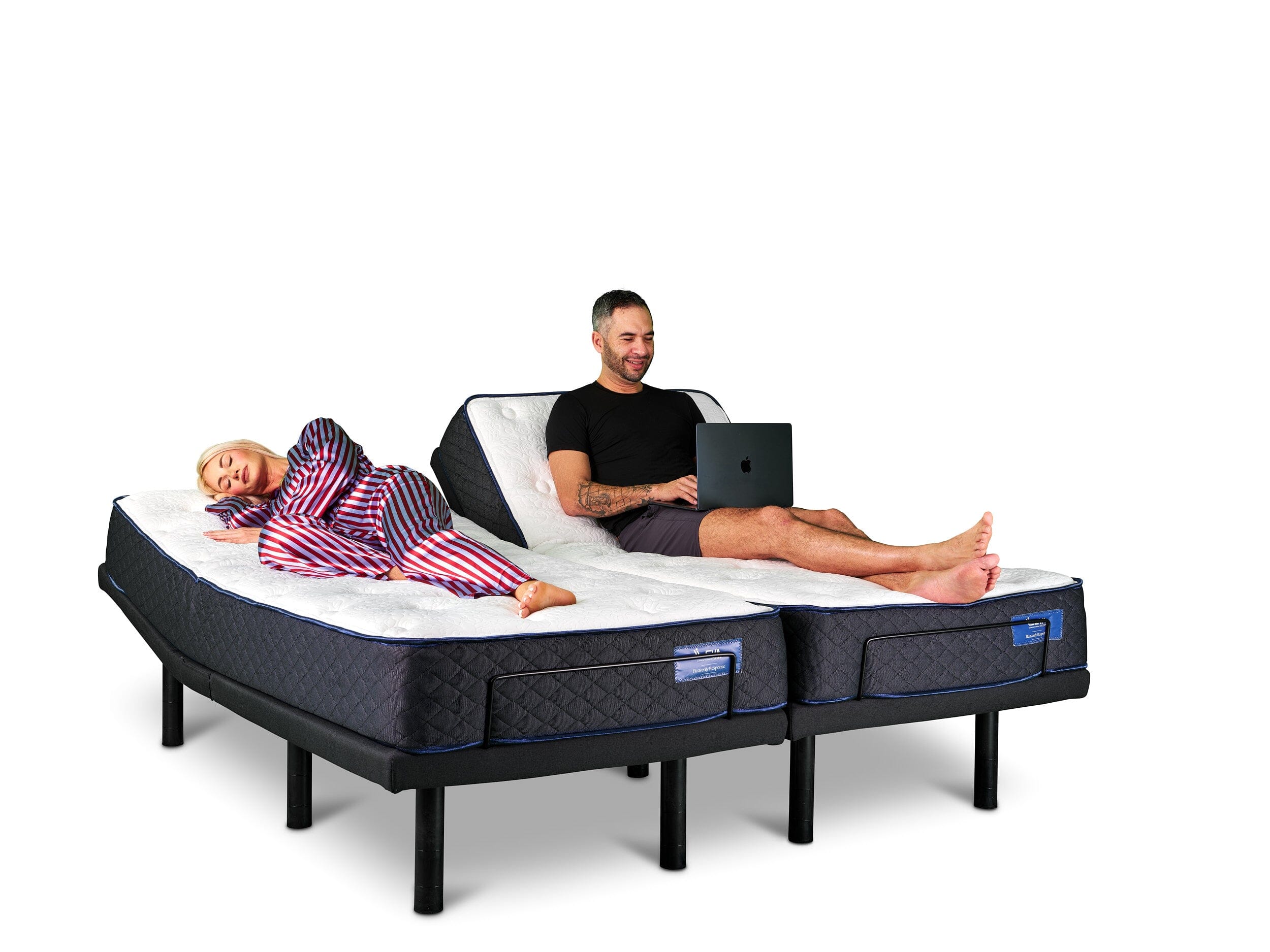
For a Split King with two Twin XL mattresses, each 38 x 80 inches, on separate bases, each half needs its own Twin XL fitted sheet and mattress protector, while a standard King duvet cover spans both halves. Leva Sleep’s Split Queen is a unique Canadian configuration. It uses two 30-inch-wide mattresses that share a standard Queen duvet cover measuring 88 x 90 inches, while Leva’s duvet clips keep each partner’s insert in place when the bases move independently.
Match the duvet cover dimensions exactly to the insert size to avoid bunching when the cover is too large or fill compression when it is too small. Oversized Queen options up to 98 x 98 inches are available for extra drape and can give each partner a few more inches of fabric to tuck in.
Step-by-Step Guide to Using a Zipper Duvet Cover
Installing a zipper duvet cover on an adjustable base stays simple when the base is flat. Use these steps for a secure fit.
- Lower both sides of the adjustable base to the flat position before you make the bed.
- Turn the duvet cover inside out and lay it flat on the mattress with the zipper end at the foot of the bed.
- Reach inside the cover, grab the far two corners of the insert, and pull the cover right-side out over the insert in one motion.
- Attach each corner of the insert to the matching internal corner tie inside the cover. If the cover has eight ties, secure the midpoint ties along the long edges as well.
- Close the zipper fully from one end to the other. Closing the zipper before washing also reduces stress on the teeth and slider during laundering.
- If you use Leva Sleep’s duvet clips on a split configuration, clip each partner’s insert to the cover at the centre seam to prevent cross-migration when one side elevates.
- Attach the fitted sheet with deep pockets and extra elastic before you elevate the base.
Cost vs. Value for Zipper Bedding on Adjustable Beds
Zipper duvet covers with reinforced closures cost more upfront than envelope or basic button alternatives, especially 3-sided and full-perimeter designs that need extra hardware and construction labour. This initial premium connects directly to long-term value. The duvet system approach uses one durable insert with multiple covers over time, which usually costs less than replacing full comforters repeatedly and also gives more style flexibility.
Duvet systems often last longer than traditional comforters when you follow care instructions, because the decorative cover absorbs most daily wear while the insert stays protected. Spending an extra $10–$20 for a zipper or button closure over an envelope design is recommended for better performance, particularly in the 300–600 thread count range. For couples on a split adjustable base, the added stability of a zipper cover also cuts down on nightly re-tucking of a migrated insert, which quietly steals sleep even though it never appears on a receipt.
Zipper Duvet Cover Comparison Table
| Closure Type | Zipper Placement | Corner Security | Number of Sealed Edges |
|---|---|---|---|
| Hidden Zipper (single edge) | Bottom edge inside a fabric flap; invisible from outside | Needs at least 4 internal corner ties; 6–8 ties recommended for split bases | 1 |
| 3-Sided Zipper | Runs along both short ends and the bottom | Removes corner gaps and works best when combined with internal ties | 3 |
| Full-Perimeter Zipper | Zips around all four sides; premium option | Provides maximum stability even without clips | 4 |
| Button Closure | 6–8 buttons along the bottom edge; gaps possible between buttons | Corner ties still required; button-loop systems hold well when sewn securely | 0 |
Frequently Asked Questions
Will a standard queen zipper duvet cover fit a Leva Sleep Split Queen adjustable bed?
Yes. A Leva Sleep Split Queen uses two 30-inch-wide mattresses that together form a standard 60-inch queen footprint. A standard Canadian queen duvet cover measuring 88 x 90 inches spans both sides normally. Leva’s duvet clips attach to the insert at the centre seam and keep each partner’s insert in place when one base elevates independently of the other. For extra drape, oversized queen covers up to 98 x 98 inches are available and give each partner more fabric to tuck around themselves.
How do you wash a zipper duvet cover without damaging the zipper?
Close the zipper fully before placing the cover in the washing machine. Use a gentle or delicate cycle with cold water and a mild detergent. Avoid high-heat drying, because repeated heat cycles stress the zipper teeth and slider, especially on budget covers with thin, single-head zippers. Dual-head zippers and those with thick metal or reinforced plastic teeth handle frequent washing better. Tumble dry on low or air dry flat. Pre-washed cotton covers that have already been preshrunk usually limit additional shrinkage to less than 3–5% when washed in cold water and dried on low heat.
Is a zipper duvet cover suitable for couples with different temperature preferences?
A zipper duvet cover works well with the Scandinavian two-duvet method, where each partner uses a separate insert inside an individual cover. On a Leva Sleep split adjustable base, this setup becomes especially effective. Each person chooses the insert weight and fabric that match their temperature needs, and Leva’s duvet clips secure each insert independently. For hot sleepers in Ontario summers, linen or bamboo viscose covers paired with a lightweight 150–250 GSM insert are recommended. For cooler sleepers or Alberta winters, cotton sateen with a heavier 400–600 GSM fill provides more warmth.
What is the difference between a hidden zipper and a 3-sided zipper duvet cover for an adjustable bed?
As explained in the zipper comparison section, a hidden zipper seals only the bottom edge and leaves the two bottom corners as weak points when the base moves. A 3-sided zipper removes those gaps by extending the closure along both short ends and the bottom. On a split adjustable bed where each side elevates independently and shear forces act on the bedding from several angles, the 3-sided zipper gives noticeably better insert retention. A full-perimeter zipper, which seals all four sides, offers the most secure option but also carries the highest price.
Why are zipper duvet covers more expensive than envelope or button covers?
Zipper duvet covers cost more because the closure needs extra hardware, reinforced stitching around the zipper tape, and, in 3-sided or full-perimeter designs, more construction labour. Covers with zippered sides instead of a single bottom opening often sit at a higher price point than traditional designs. The premium reflects longevity and performance. A quality zipper cover with reinforced teeth and internal corner ties usually outlasts several envelope covers, and the insert stays cleaner longer because it remains fully sealed during use. The duvet system model, which uses one durable insert plus replaceable covers, consistently costs less over time than replacing full comforters.
Conclusion: Stable Zipper Bedding for Better Shared Sleep
Traditional duvet covers, whether envelope, button, or single-edge hidden zipper, were not built for the shear forces and independent movement of a split adjustable base. The outcome feels familiar: shifting inserts, bunching fabric, and nightly frustration that undermines a premium sleep investment. A 3-sided or full-perimeter zipper duvet cover, combined with eight internal corner ties and Leva Sleep’s duvet clips, removes those failure points.
Leva Sleep designs every part of its sleep system, from whisper-quiet split bases to specialized bedding accessories, to work together as one solution. For Canadian couples in Ontario and Alberta who want to share a bed comfortably without compromise, that level of integration often marks the difference between a bed that supports their sleep and one that constantly fights it.