Written by: Matthew Timmins, Founder and Managing Director, Leva Sleep
Key Takeaways for Canadian Couples
- Split Queen adjustable beds let each partner control firmness, elevation, and position independently, solving snoring, pain, and comfort conflicts without separate rooms.
- Mattresses that work well on adjustable frames include memory foam, hybrid pocket coil models between 10 and 14 inches thick, and latex for flexibility, motion isolation, and durability.
- Leva Sleep offers premium split bundles at prices 30-50% lower than Tempur-Pedic or Casper, with app control, quiet German motors, and white-glove delivery in Ontario and Alberta.
- 2026 anti-snore technology auto-detects snoring and adjusts head elevation, which can improve sleep apnea outcomes naturally compared with CPAP masks.
- Couples ready to reunite in comfort can explore Leva Sleep’s adjustable bed packages designed specifically for shared sleep.
Best Mattress Types for Adjustable Bed Frames
The mattress you choose directly affects comfort and how long your adjustable system lasts. Three mattress types work especially well with adjustable bed frames.
- Memory Foam: This material offers strong flexibility and low motion transfer, which suits couples. Memory foam moves and flattens quickly with positional changes, so it performs well for frequent adjustments.
- Hybrid Pocket Coil: This style combines responsive bounce with long-term durability. WinkBed and Helix Midnight Luxe feature pocketed coil cores, which suit couples who have different comfort preferences.
- Latex: Latex provides natural responsiveness and helps regulate temperature, although it feels heavier and denser than foam alternatives.
The ideal thickness range for adjustable mattresses is 10 to 14 inches. Many couples find that 12-inch hybrids offer a strong balance of comfort, support, and flexibility for elevation. Traditional innerspring mattresses with rigid coil systems often resist bending and can suffer damage on adjustable frames, so avoid those models.
Shop Leva’s hybrid adjustable mattress bundles designed for Canadian couples.
Ideal Specs and Thickness for Adjustable Mattresses
Mattress thickness should not exceed 12 inches for maximum flexibility, although most manufacturers recommend a 10 to 14 inch range for solid performance. For hybrid mattresses, 12 inches usually delivers comfort without sacrificing adjustability.
|
Specification |
Ideal Range |
Why for Couples |
Leva Match |
|
Thickness |
10-14 inches |
Flexes during elevation without strong resistance |
12″ low-motion hybrids |
|
Firmness (ILD) |
Split options 4-8 |
Supports different comfort preferences on each side |
Custom split firmness |
|
Edge Support |
Reinforced perimeter |
Allows independent sitting and easier entry and exit |
Pocket coils with zero sag |
|
Motion Isolation |
High performance |
Reduces partner disturbance during movement |
Memory foam comfort layers |
Mattresses thicker than 14 inches often resist bending and can strain adjustable base motors over time. Very thin mattresses under 8 inches may not provide enough support for proper spinal alignment when the bed elevates.
Top Adjustable Bed and Mattress Bundles in Canada
Canada’s 2026 adjustable bed market includes many bundle options, yet brands differ sharply on price and features. The table below shows how leading split bundles compare for Canadian couples.
|
Brand/Bundle |
Price (Split Queen) |
Split Features |
Delivery (ON/AB) |
|
Leva Split Queen |
30-50% less than competitors |
Independent app control, massage, and anti-snore modes |
White-glove setup |
|
Douglas Bundle |
$3,999 |
Basic split with no app control |
Standard delivery |
|
Casper Bundle |
$4,200 |
Foam flex with limited motor options |
Bed-in-box shipping |
|
Sleep Country |
$4,500 |
Hush base with few model choices |
Store pickup required |
|
Tempur-Pedic |
$5,500+ |
Premium foam with relatively noisy motors |
Variable service levels |
Leva Sleep’s vertical integration keeps costs lower while still delivering luxury features. Many competitors offer only 3 to 5 adjustable models. Leva provides 15 to 20 configurations with whisper-quiet German motors, app control, and couple-focused features such as 2026 anti-snore technology.
Claim 30-50% Leva savings with premium features that competitors do not include.
Split Queen and Split King Choices for Canadian Couples
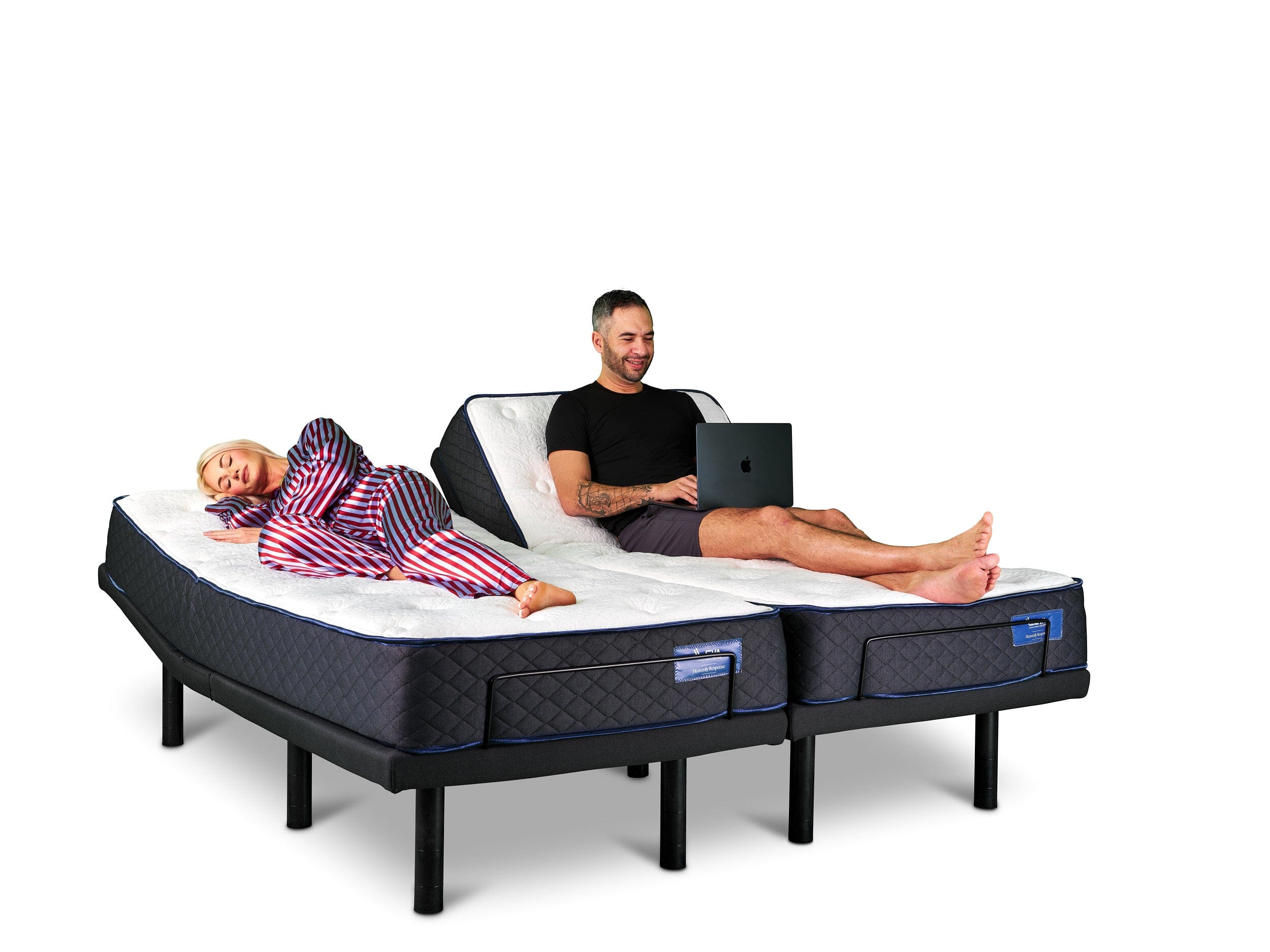
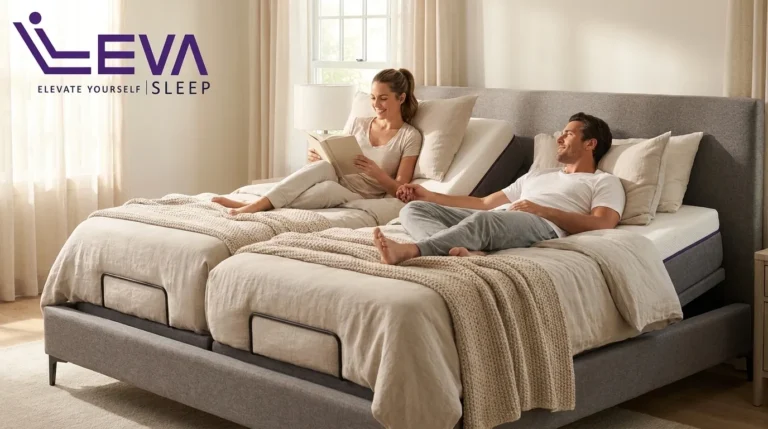
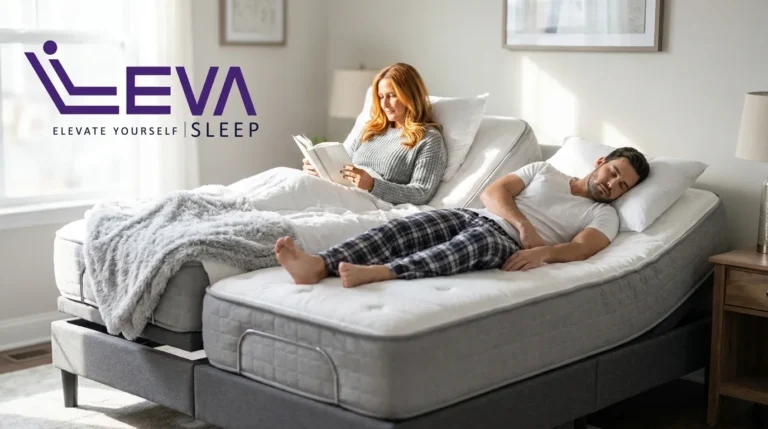
Split configurations transform shared sleep by giving each partner independent controls. Split adjustable beds offer independent comfort adjustments and reduce motion disturbance, which suits partners with different sleep needs.
Leva’s Split Queen option maximizes space efficiency while preserving full split functionality. Each side includes independent elevation, massage, firmness, and temperature controls. The 2026 anti-snore mode detects snoring patterns and makes small head elevation changes, which can remove the need for separate bedrooms.
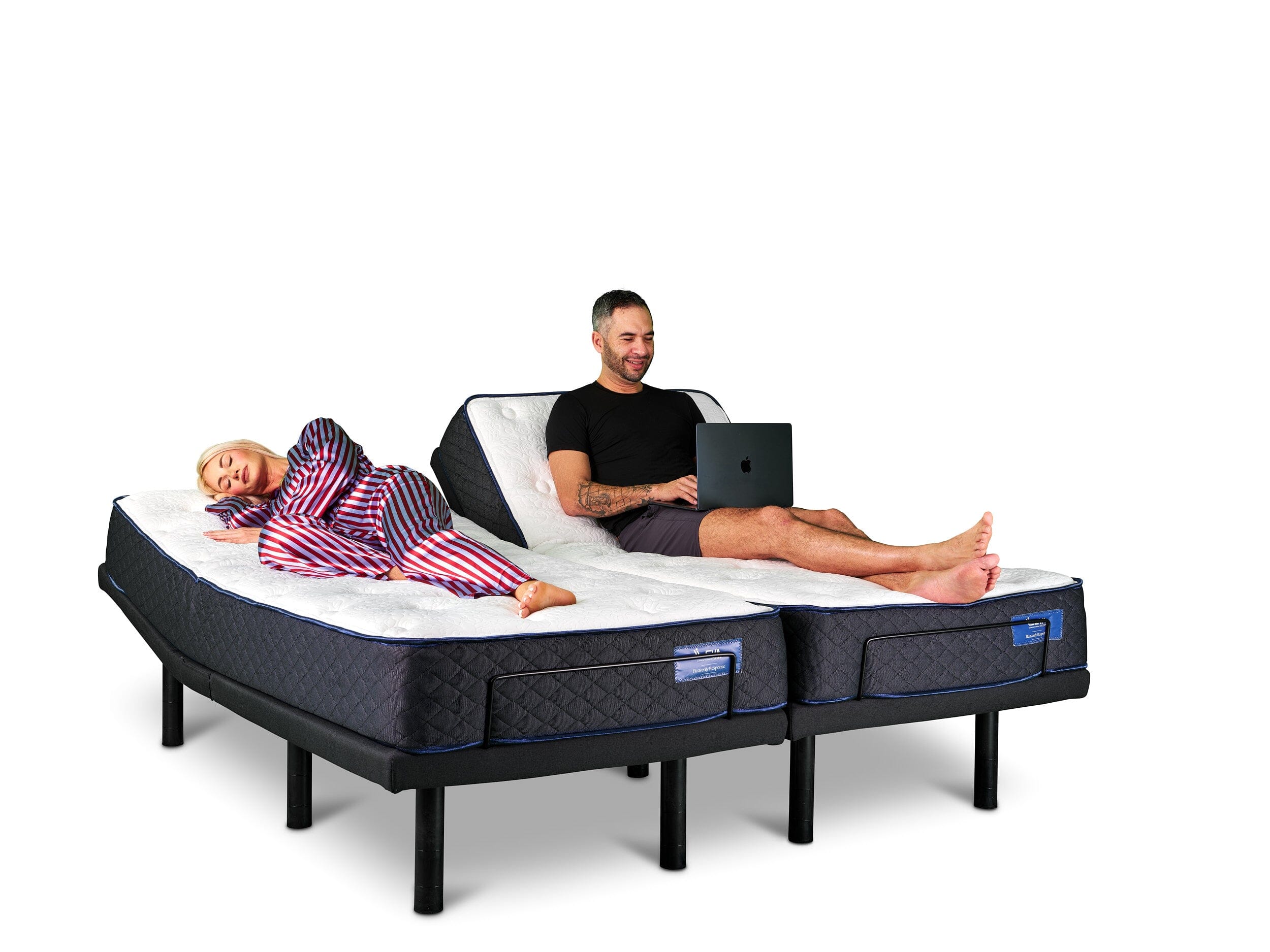
Use these Split Queen versus Split King points when planning for a Canadian home:
- Split Queen: Measures 60″ x 80″ in total and suits smaller bedrooms while still offering independent controls.
- Split King: Measures 76″ x 80″ in total and provides maximum space, but needs a larger room.
Customer testimonials often describe couples reuniting in the same bed after years of sleeping apart because of snoring or medical issues. Many sleep apnea patients report meaningful improvement with gentle head elevation compared with their experience using CPAP masks alone.
Accessories and Complete Sleep Systems
A comfortable adjustable setup includes more than a mattress and base. Leva designs specialized bedding with extra-elastic fitted sheets, duvet clips that hold covers during position changes, and mattress protectors that stay in place while the bed elevates. This complete system contrasts with many bed-in-a-box brands that expect customers to find compatible accessories on their own.
Helpful adjustable bed accessories include remote control pockets, pillow wedges that support spinal alignment, and temperature regulation pads that work with the base’s heating and cooling features.
Common Adjustable Bed Drawbacks and Leva Solutions
Adjustable beds can present challenges that careful engineering can reduce. Common concerns include motor noise, higher costs, and gaps between split mattresses.
Leva addresses these issues with whisper-quiet German motors that cut noise, competitive pricing through vertical integration, and precise construction that limits gaps. The zero-motion-transfer design keeps one partner’s adjustments from disturbing the other, which solves a key concern for many couples.
Frequently Asked Questions
Can a normal mattress go on an adjustable frame?
No. Traditional mattresses with rigid innerspring coils or continuous wire systems often sag, crease, or suffer structural damage on adjustable frames. Use only flexible mattresses designed for adjustable bases to avoid premature wear and to maintain warranty coverage.
What is the best adjustable bed for sleep apnea in Canada?
Leva’s elevation features and 2026 anti-snore technology provide a practical alternative to CPAP machines for many people with mild to moderate sleep apnea. Gentle head elevation helps open the airway naturally, and the anti-snore detection system makes automatic micro-adjustments when it detects snoring.
Split Queen vs Split King: which works better?
Split Queen delivers the same independent controls as Split King in a more space-conscious 60-inch width instead of 76 inches. For many Canadian bedrooms, Split Queen offers full split functionality while still fitting comfortably in the room.
What are the 2026 anti-snore features?
Leva’s 2026 anti-snore technology uses advanced sensors to track snoring patterns and then makes subtle head elevation changes to reduce or stop snoring without waking either partner. This dynamic response improves on static elevation positions that never change during the night.
Does Leva offer delivery in Ontario and Alberta?
Yes. Leva provides white-glove delivery throughout Ontario and Alberta, including bedroom setup, product tutorials, height adjustments, and removal of the old bed with donation or recycling when possible.
What is the best thickness for an adjustable mattress?
The ideal thickness range is 10 to 14 inches. Many couples prefer 12-inch hybrid mattresses because they balance comfort, support, and flexibility for adjustable frames. Thicker mattresses often resist bending, while thinner models may not support the body well enough.
Conclusion: Why Canadian Couples Choose Leva Sleep
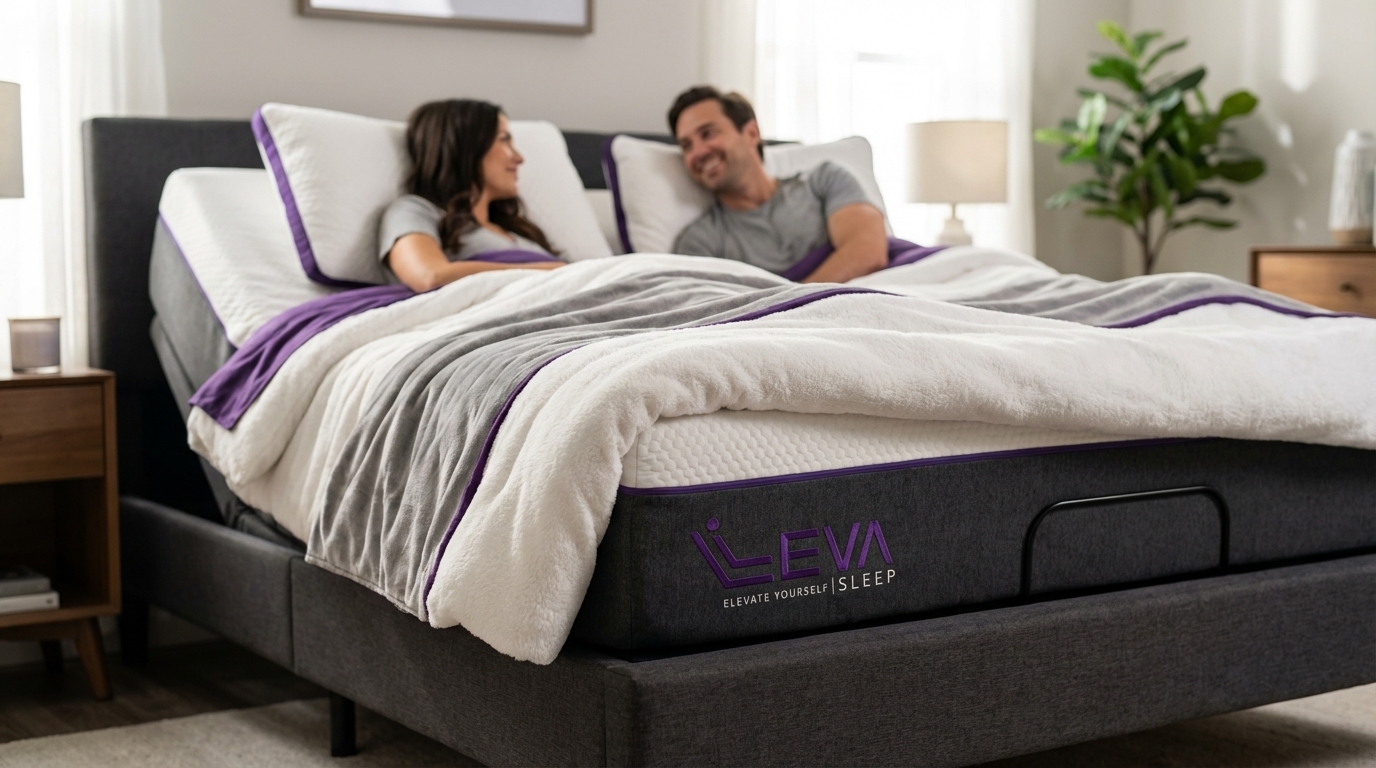
Leva Sleep leads Canada’s adjustable bed frame and mattress options for couples who want luxury comfort without luxury pricing. Specialized split configurations, whisper-quiet engineering, and innovative 2026 anti-snore technology help couples share a bed again at prices 30-50% lower than many competitors.
Shop Leva Sleep’s adjustable beds today and see why more than 25,000 customers trust Canada’s adjustable bed authority.