Written by: Matthew Timmins, Founder and Managing Director, Leva Sleep
Key Takeaways
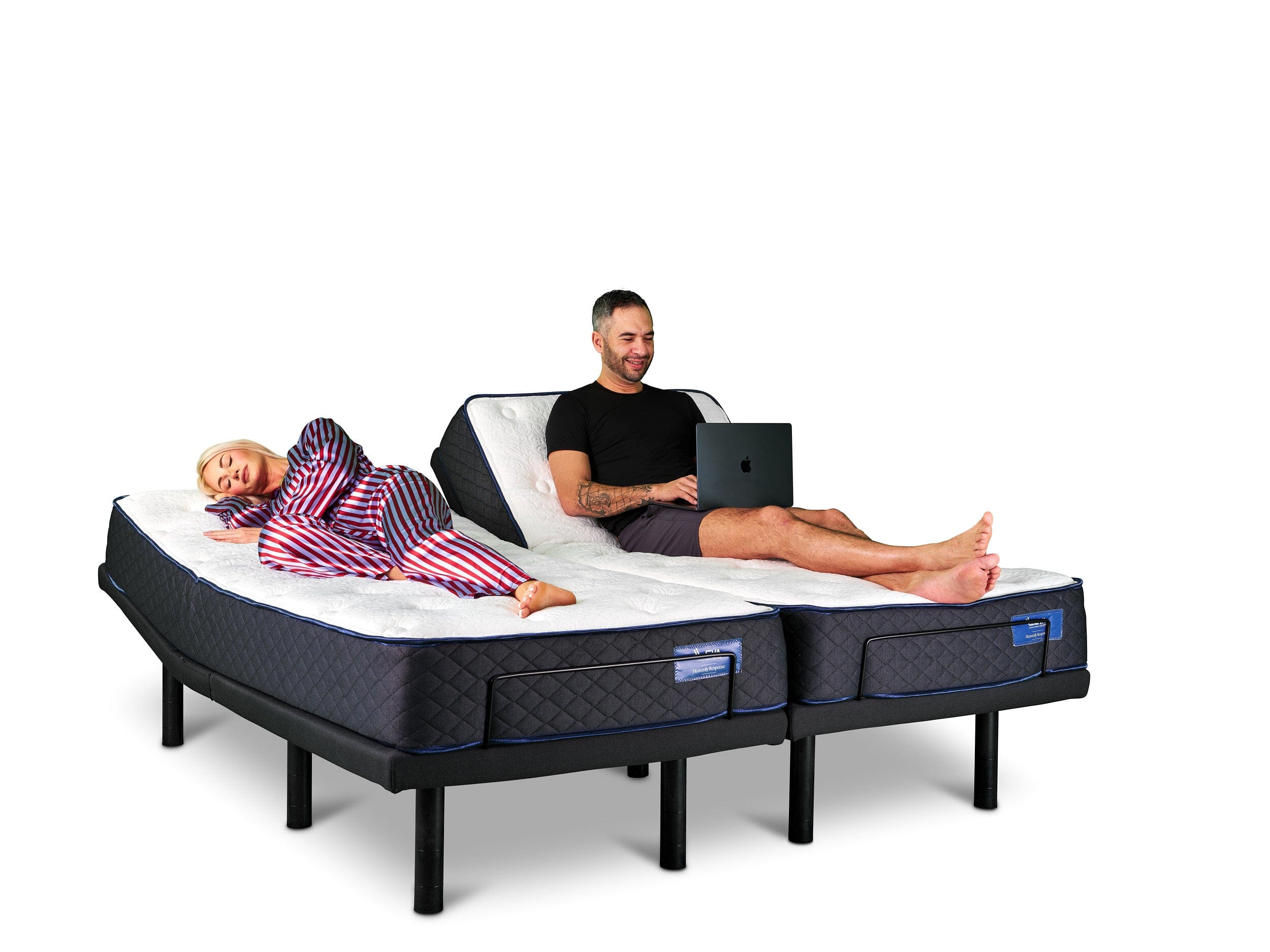
- Split queen adjustable beds use two independent 30″ x 80″ halves. Each partner controls elevation, massage, and zero-gravity positions, which removes motion disturbance for couples.
- Leva Sleep leads the Canadian split queen market with whisper-quiet German motors, anti-snore technology (spring 2026), and accessories such as extra-elastic sheets.
- Top competitors include Douglas (affordable, easy setup), Silk & Snow (extended warranties), Ghostbed (basic anti-snore features), and Sleep Country (special order with in-store consultation).
- Key factors for Canadian buyers include white-glove delivery in Ontario and Alberta, motor quietness under 40 dB, 10+ year warranties, and compatibility with deep-pocket sheets and duvet clips.
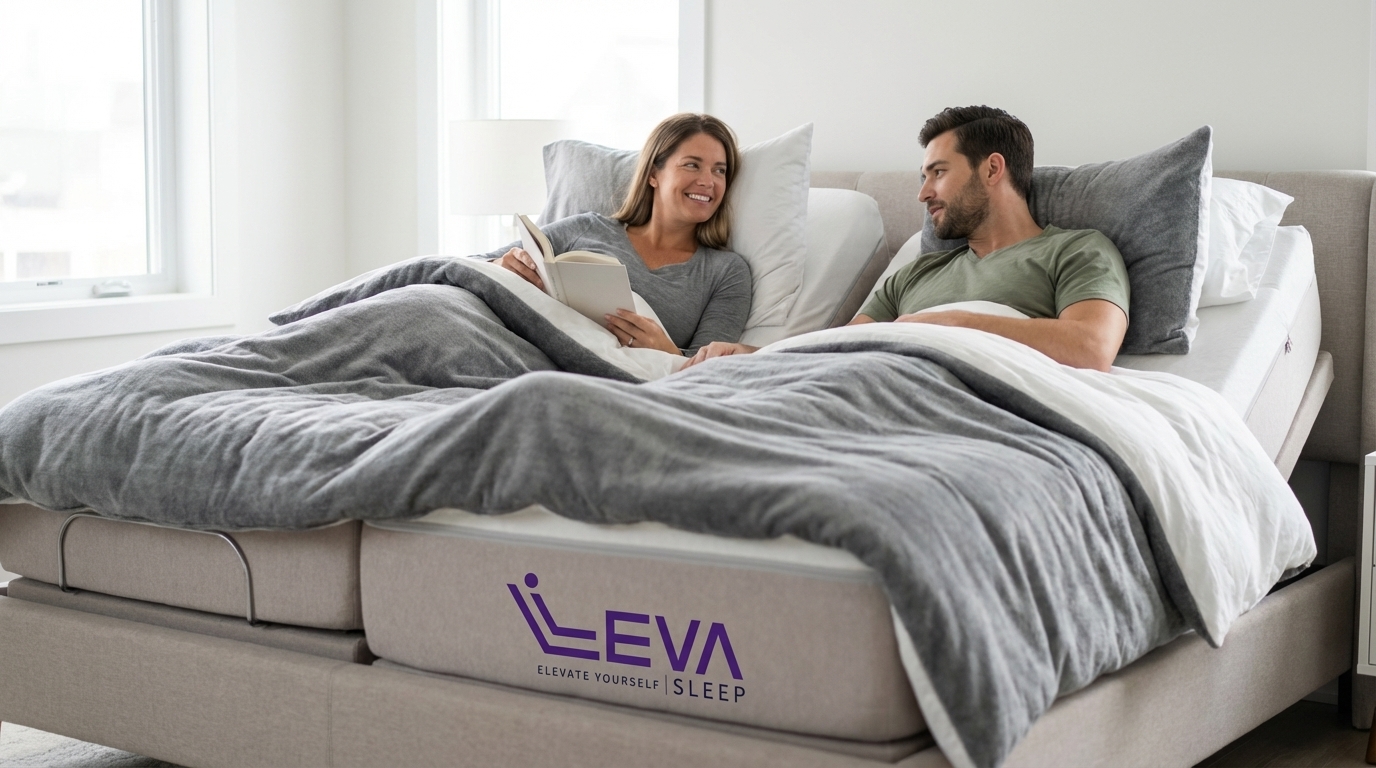
- Leva Sleep’s couple-focused split queen system helps end sleep divorce. Shop Leva Sleep adjustable bed packages for whisper-quiet independent controls and restored intimacy.
How Split Queen Adjustable Beds Work for Couples
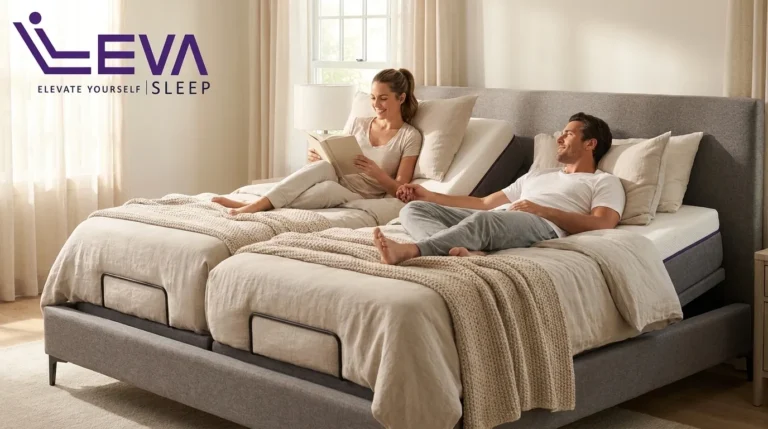
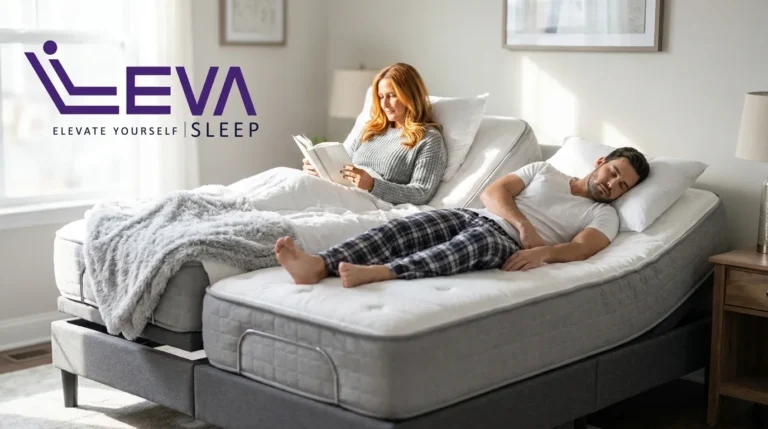
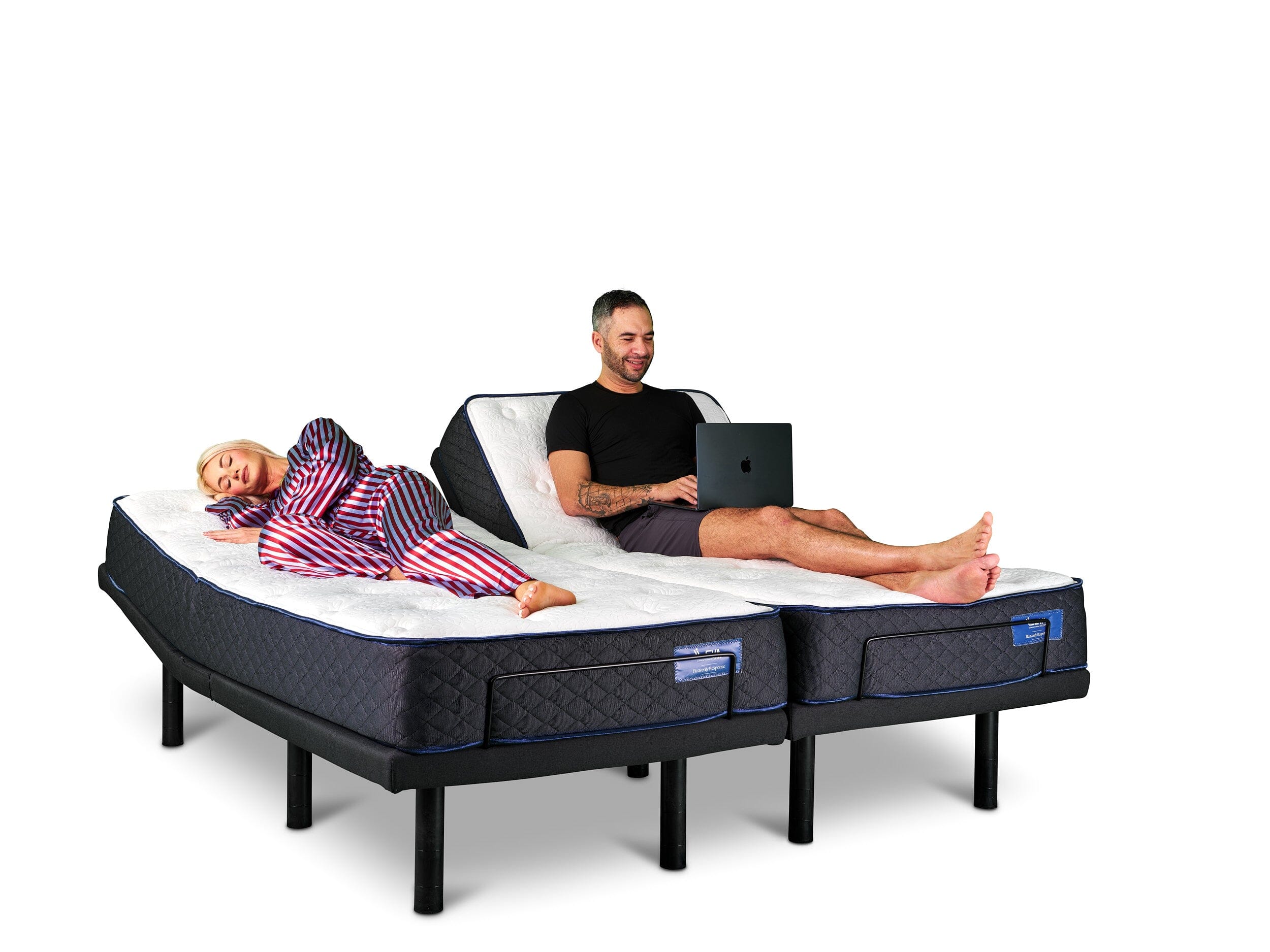
A split queen adjustable bed uses two 30″ x 80″ halves that give each partner independent elevation, firmness, and massage controls. Split configurations eliminate motion disturbance and support personalized zero-gravity positions, lumbar support, and pillow tilt through smartphone apps. Traditional flat beds cannot match this flexibility for snoring relief, pain management, and temperature differences while sharing one mattress size. Leva Sleep focuses on split queen setups with whisper-quiet German motors and anti-snore technology, unlike general retailers with limited adjustable models that treat bases as secondary add-ons.
Top 5 Split Queen Adjustable Beds in Canada for 2026
1. Leva Sleep Split Queen Adjustable Base
Leva Sleep dominates the Canadian split queen category with 8 years of experience, $50M in lifetime sales, and more than 25,000 customers. The split queen system includes whisper-quiet German motors, independent app controls, and anti-snore technology scheduled for spring 2026. Each package can include hybrid or all-foam mattresses, extra-elastic fitted sheets, duvet clips, and remote pockets tailored for adjustable bases.
Pros: Whisper-quiet motors, anti-snore mode, white-glove delivery with old bed removal, 30-50% lower pricing than Tempur-Pedic, Canadian assembly
Cons: Higher pricing than basic entry-level models, delivery fee for white-glove service
Price: Starting at a more accessible price point than premium competitors | Warranty: 10 years | Availability: Ontario and Alberta with white-glove delivery
2. Douglas Adjustable Bed
Douglas customers report fewer aches, pains, and snoring with the split queen configuration. The base offers zero-gravity presets, massage functions, and straightforward setup with color-coded parts. Douglas keeps pricing competitive at $1,299 for queen models, which undercuts many premium brands while maintaining solid construction.
Pros: Affordable pricing, easy setup, effective for pain relief, Canadian brand
Cons: Limited split queen stock, basic app features, no dedicated accessories for adjustable bases
Price: $1,899 CAD (split queen) | Warranty: 10 years | Availability: Canada-wide shipping
3. Silk & Snow Adjustable Bed
Silk & Snow’s split king models use near-silent motors that reduce partner disturbance and work with their bed frames using removable feet. The company backs mattresses with a 15-year warranty and a 10-year adjustable bed warranty. The Premier model adds advanced features, although the upgrade carries a steep price.
Pros: Long warranty coverage, near-silent operation, Canadian company, compatibility with many frames
Cons: Expensive Premier upgrades, limited split queen choices, higher costs for advanced features
Price: $2,199 CAD | Warranty: 10 years (base), 15 years (mattress) | Availability: Canada-wide
4. Ghostbed Adjustable Base
GhostBed bases in split formats include anti-snore presets and massage functions with simple installation. The brand offers optional white-glove delivery and focuses on easing aches, pains, and snoring through elevation changes. Ghostbed does not match the Canadian-specific expertise or couple-focused accessories offered by dedicated adjustable bed specialists.
Pros: Anti-snore settings, massage features, optional white-glove delivery, split configurations available
Cons: Basic app controls, fewer split queen models than competitors
Price: $1,799 CAD | Warranty: 5 years | Availability: Canada-wide delivery
5. Sleep Country Select Split Queen Option
Sleep Country sells select split queen adjustable bases as special orders through its retail stores. Shoppers benefit from in-store consultation and a familiar Canadian retailer with financing options. The adjustable selection remains smaller than specialist brands and usually offers fewer tech features and customization choices for couples who want advanced sleep settings.
Pros: In-store consultation, established Canadian retailer, financing options
Cons: Limited selection, special order process, basic feature sets, higher markup
Price: $2,899 CAD | Warranty: 5-10 years (varies by model) | Availability: Special order across Canada
|
Brand |
Motor Noise (dB) |
Warranty (Years) |
Price Range (CAD) |
Canadian Delivery |
|
Leva Sleep |
30-40 (Whisper) |
10 |
$2,499+ |
White-glove ON/AB |
|
Douglas |
40-45 (Quiet) |
10 |
$1,899 |
Canada-wide |
|
Silk & Snow |
35-40 (Near-silent) |
10-15 |
$2,199 |
Canada-wide |
|
Ghostbed |
40-50 (Moderate) |
5 |
$1,799 |
Limited |
Why Leva Sleep Works Best for Canadian Couples
Leva Sleep’s vertical integration keeps prices 30-50% below Tempur-Pedic while maintaining premium build quality. White-glove delivery includes removal of your old bed, professional setup, and a walkthrough of the controls in Ontario and Alberta. Extra-elastic sheets and duvet clips address common issues such as slipping bedding when the head or foot raises. The upcoming anti-snore technology uses small position changes to reduce snoring and partner disturbance. Customer stories often mention relief from sleep apnea symptoms and renewed intimacy after years of sleeping in separate rooms. Competing brands like Douglas and Silk & Snow do not match Leva’s whisper-quiet motors, couple-focused design, or full accessory ecosystem. Shop Leva Sleep’s adjustable beds to access one of Canada’s most advanced split queen systems.
Buying a Split Queen in Canada: Delivery, Bedding, and Setup Tips
Most Canadian retailers treat split queen adjustable beds as special orders, so Leva Sleep’s ready-to-ship inventory offers a clear advantage. White-glove delivery helps with heavy lifting, complex assembly, and precise placement, which many couples prefer over DIY setups. Standard sheets often pop off adjustable corners, so deep-pocket fitted sheets with extra elastic and duvet clips work better for frequent elevation changes. Warranty coverage ranges from 5 to 15 years across brands, and Leva Sleep’s 10-year plan covers motors, electronics, and frame parts. Shoppers should also check bedroom clearance, app compatibility, and each partner’s sensitivity to noise and movement when choosing an adjustable bed in Canada.
Conclusion: Ending Sleep Divorce with Leva Sleep
Leva Sleep’s split queen adjustable system offers a practical path to end sleep divorce for many Canadian couples. Whisper-quiet independent controls, anti-snore technology, and couple-first design support shared comfort without compromise. The company’s 8 years of experience, more than 25,000 customers, and complete accessory lineup create strong value for partners who want to stay in the same bed. Shop Leva Sleep’s adjustable beds today to share one bed again with personalized comfort for both sleepers.
Frequently Asked Questions
Who makes the best split queen adjustable bed?
Leva Sleep makes the leading split queen adjustable bed in Canada, with whisper-quiet German motors, independent app controls, and couple-focused accessories. The brand’s 8 years of experience, $50M in lifetime sales, and upcoming anti-snore technology position it as a top Canadian adjustable bed authority with 30-50% better value than many premium competitors.
What is the best adjustable bed in Canada?
Leva Sleep’s split queen system ranks among the best adjustable beds in Canada for couples. It combines quiet motors, full white-glove delivery in Ontario and Alberta, and features such as anti-snore mode (spring 2026) and specialized bedding. Vertical integration lets Leva deliver luxury quality at more accessible prices than Tempur-Pedic and similar high-end brands.
What are the best split queen adjustable beds Canada offers?
Top split queen adjustable beds in Canada include Leva Sleep with whisper-quiet motors and anti-snore technology, Douglas as an affordable Canadian option, Silk & Snow with extended warranties, Ghostbed with basic split features, and Sleep Country with special order access. Leva Sleep stands out through deep couple expertise, a full accessory range, and strong satisfaction among more than 25,000 users.
What recommendations exist for couples considering adjustable beds?
Couples should choose split configurations for independent control, motors under 40 decibels to avoid waking a partner, and bedding designed for adjustable bases. Leva Sleep reviews frequently mention restored intimacy and resolved sleep divorce thanks to couple-focused design, anti-snore features, and white-glove delivery that removes setup stress.
Can you get a split adjustable bed in queen size?
Yes. A split queen adjustable bed uses two 30″ x 80″ halves that provide independent elevation, massage, and firmness controls while keeping standard queen dimensions. Leva Sleep focuses on split queen models with app-based controls that support different sleep needs without separate rooms or losing the shared bed experience.