Written by: Matthew Timmins, Founder and Managing Director, Leva Sleep | Last updated: August 2, 2026
Key Takeaways for Canadian Latex Hybrid Shoppers
- A latex hybrid mattress pairs natural or blended latex with pocketed coils to create responsive cushioning, steady airflow, and strong adjustable-base compatibility that all-foam designs rarely match.
- Structural cooling from open-cell latex and coil ventilation keeps air moving through the mattress, while surface treatments like gel or phase-change materials cool strongly at first but lose impact after initial contact.
- Latex’s quick pushback helps keep the spine aligned more reliably than memory foam, which can reduce back-pain risk for back and side sleepers while still providing solid edge support and motion isolation.
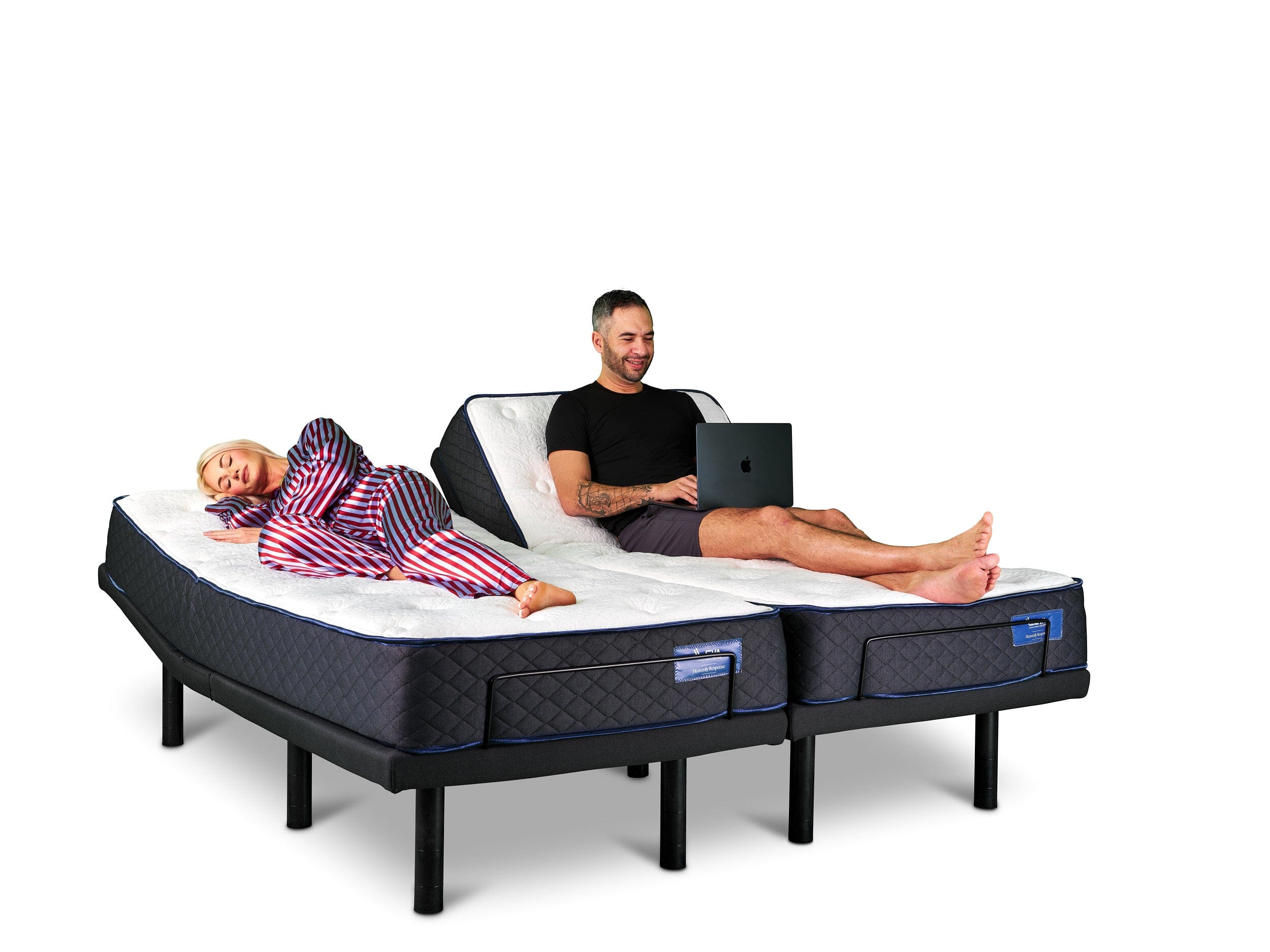
- Individually pocketed coils and 10–12-inch profiles make latex hybrids a practical choice for split Queen or King adjustable bases, so couples can adjust each side independently.
- Canadian couples who want a complete split-base latex hybrid system can explore Leva Sleep’s locally assembled adjustable packages that avoid cross-border markups and include white-glove delivery.
How a Latex Hybrid Mattress Differs from All-Foam Designs
A latex hybrid mattress uses at least one layer of Talalay or Dunlop latex over a pocketed-coil base, usually totalling 10–14 inches in height. All-foam mattresses replace the coil layer with extra polyfoam or memory foam, which changes the feel, support, and heat behaviour of the mattress in noticeable ways.
Key construction differences between latex hybrids and all-foam mattresses include the following:
- Support core: Pocketed coils in a latex hybrid versus dense polyfoam in an all-foam model. Individually wrapped coils flex independently, which matters for adjustable-base use and motion isolation.
- Responsiveness: Latex returns to its original shape quickly after compression instead of conforming slowly like memory foam, which reduces the “stuck” sensation many hot sleepers report.
- Airflow: Coil cores add airflow underneath the latex comfort layer. This creates a ventilation pathway that all-foam mattresses lack.
- Durability: Latex hybrids are among the most durable mattresses on the market, with quality hybrid mattresses expected to last 7 to 10 years with proper care.
- Weight: Queen latex hybrid mattresses weigh around 120 lbs, comparable to all-latex models at 125 lbs, because pocketed coils replace thick latex support cores.
For Canadian couples comparing options, see how Leva’s pocket-coil latex hybrids pair with split Queen and King bases that are designed for independent adjustment.
Cooling Science Behind Latex Hybrid Mattresses
Temperature control often drives Canadian couples toward a latex hybrid instead of all-foam. The cooling edge comes from two structural mechanisms working together rather than from surface treatments alone.
Structural cooling uses coil cores plus latex or open-cell foam comfort layers that allow vertical airflow, and this matters as much as surface cooling features for steady temperature regulation. Gel infusions typically lose effectiveness within 30–90 minutes once they reach body temperature, while phase-change material covers cool strongly for the first 20–40 minutes before saturating, although they can recharge overnight. In contrast, airflow channels created by pocketed coils and open-cell latex keep working throughout the night.
When you evaluate cooling performance, focus on these factors:
- Look for independent testing that measures surface temperature rise over time instead of relying on vague cooling claims.
- Compare airflow pathways from pocketed coils and open-cell latex with all-foam constructions that lack internal channels.
- Check whether cooling features are structural, such as coil cores and aerated latex, or surface-only, such as gel and phase-change materials that may lose effectiveness after initial contact.
- Review expert commentary on how open space around coils allows more airflow than materials that compress heavily and increase body contact.
Latex Hybrid Mattress vs Memory Foam for Back Pain
Back pain relief depends on a mattress that maintains spinal alignment without letting the hips or shoulders sink too deeply. This is where memory foam often falls short, because its close conforming can cause the lumbar region to drop out of alignment for back and side sleepers over time. Latex avoids this problem through its pushback characteristic, which helps keep the spine in a more neutral position throughout the night.
When you evaluate any latex hybrid for back pain, use this three-point checklist before purchasing:
- Edge support: Sit on the perimeter and see whether the edge compresses more than two inches. Weak edges reduce usable sleep surface and make getting in and out of bed harder for people with hip or knee pain.
- Temperature after 15 minutes: Lie still for 15 minutes and notice whether heat builds up. Structural cooling from coils and latex should limit warmth at this point, while surface gel treatments may already be saturating.
- Partner disturbance: Ask a partner to move or get out of bed while you remain still. Pocketed coils isolate motion more effectively than interconnected springs, and latex’s quick response limits the ripple effect that slow-recovery memory foam often creates.
Adjustable-Base Compatibility for Couples
Not every mattress works well on an adjustable base. Latex mattresses and pocket-coil hybrid mattresses work best with adjustable bases because they bend without internal damage or cracking. Connected coil systems resist articulation and can permanently deform under repeated bending.
Use these criteria to confirm a latex hybrid’s adjustable-base compatibility:
- Coil type: Choose individually pocketed coils only. Bonnell or continuous coil designs resist bending, may deform permanently, and can damage comfort layers on an adjustable base.
- Mattress height: Heights of 10–12 inches offer a strong balance of comfort, flexibility, and performance on adjustable bases, with 8–14 inches generally workable. Heights above 14 inches increase bending stress on thick latex cores.
- Edge construction: Foam-encased edge support perimeters handle repeated articulation better than steel-rod edge borders, which can dig into the base mechanism.
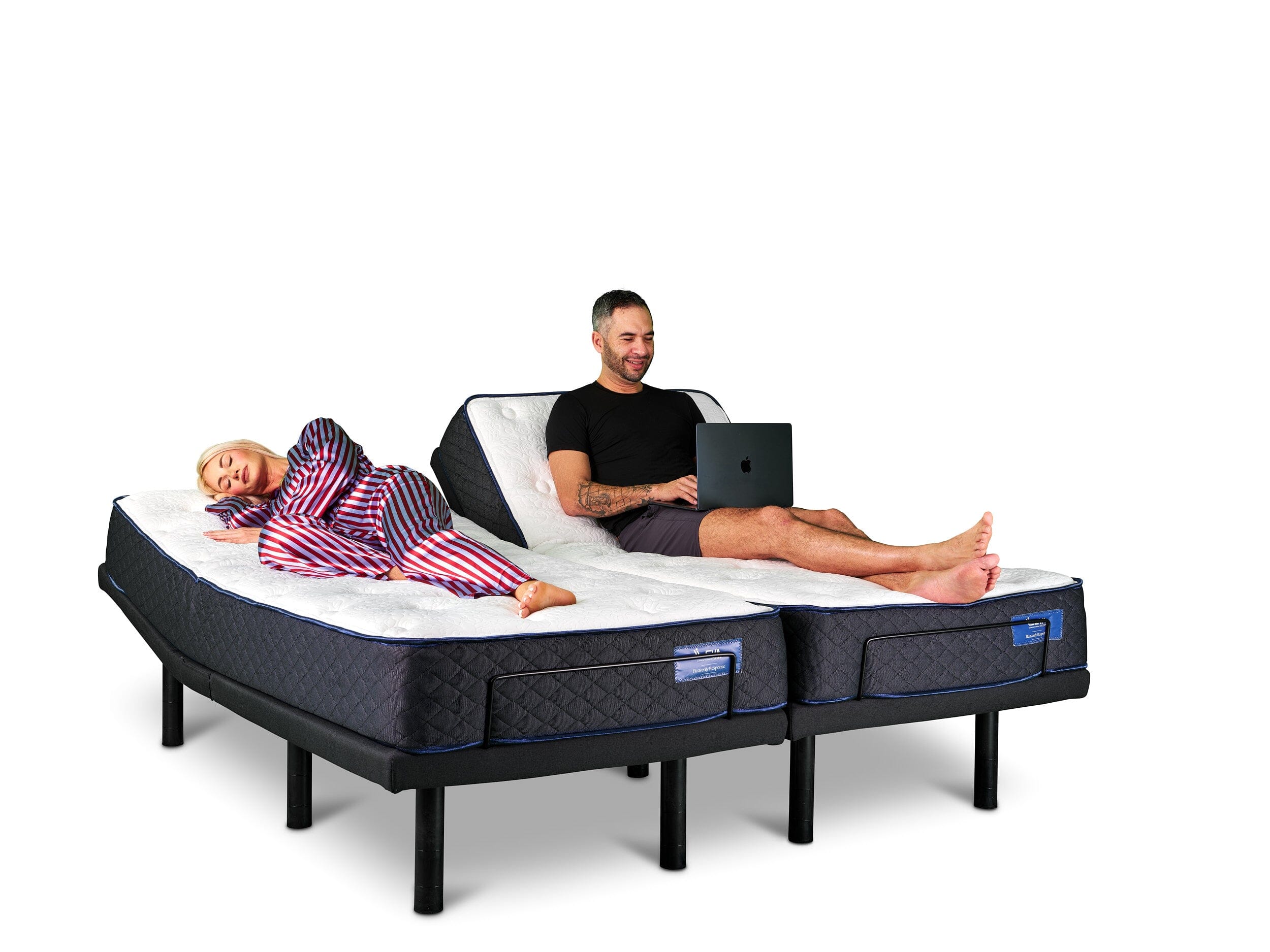
- Split configuration: A split-king adjustable bed uses two Twin XL bases and two Twin XL mattresses placed side by side, so each partner controls elevation, firmness, and position independently. Leva Sleep also offers a Split Queen configuration, which provides the same independent control in a more compact footprint.
- Manufacturer confirmation: Good Housekeeping advises contacting the mattress manufacturer directly to confirm adjustable base compatibility before purchase, since not all models perform equally on split configurations.
Browse Leva’s Split Queen and Split King configurations that pair pocket-coil latex hybrids with whisper-quiet bases built for independent couple adjustment.
Real Talk on Latex Feel, Bounce, and Durability
Latex has a buoyant, responsive feel that differs clearly from memory foam’s slow-conforming sink. Sleepers who like to move freely during the night usually find latex more accommodating, while people who want deep pressure contouring may find it less enveloping than thick memory foam.
This responsive quality also supports latex’s longevity, because the material springs back instead of staying compressed. When you assess durability, use these evaluation criteria:
- Check for independent lab testing that rates durability on standardized scales instead of relying only on marketing language.
- Look for manufacturer guidance on maintenance practices such as rotation and protection that can extend lifespan.
- Consider material properties, since natural latex’s resilient structure returns to its original shape after compression and shows greater fatigue resistance than polyurethane foam under cyclic compression testing.
- Evaluate how latex resists heat buildup better than memory foam and provides more bounce and pushback than most foams, which supports overall longevity.
Canadian Pricing and Import Realities in 2026
Canadian buyers face pricing shaped by material costs, coil count, latex type, and whether the product is assembled domestically or imported. For latex hybrids in Canada, budget models run about $1,000–$1,800 CAD, mid-range options $1,500–$2,900 CAD, and premium latex hybrids or all-latex models start around $3,000–$4,500+ CAD.
Talalay latex costs more than Dunlop latex because it uses a more complex vacuum and flash-freeze manufacturing process. US-imported luxury latex hybrids from brands such as Saatva or Tempur-Pedic equivalents add cross-border markups that push queen prices well above $3,000 CAD. Leva Sleep’s vertical integration and direct-to-consumer model positions its adjustable sleep system packages roughly 30–50% below comparable imported luxury options.
Top Canadian Latex Hybrid Mattress Options in 2026
| Option | Approx. Queen Price (CAD) | Latex Type / Coil Count | Split-Base Compatible |
|---|---|---|---|
| Silk & Snow Organic Latex (Canadian-made) | ~$1,400 | Organic latex / pocketed coils | Confirm with manufacturer |
| Restonic ComfortCare Queen Hybrid | $1,619 | CertiPUR-US foam / 1,222 pocketed coils | Confirm with manufacturer |
| Restonic Revive Tiffany Rose Latex Hybrid | $3,217 | Talalay copper-infused / 1,188 pocketed coils | Confirm with manufacturer |
| Leva Sleep Pocket-Coil Latex Hybrid (Split Queen / King package) | 30–50% below comparable US imports | Latex comfort layer / individually pocketed coils | Yes, designed for Leva adjustable bases |
Note: Pricing for non-Leva options comes from Mattress Miracle’s 2026 Canadian pricing data. Leva Sleep pricing reflects the company’s direct-to-consumer model, so contact Leva for current package pricing in Ontario and Alberta.
Who a Latex Hybrid Mattress Suits in Canada
Use this firmness guidance by sleep position and body type:
- Back sleepers (average build): Choose a medium or medium-firm latex hybrid to support the lumbar curve without excessive sinkage.
- Side sleepers: Choose medium or medium-soft to cushion shoulders and hips while latex’s pushback keeps the spine aligned.
- Stomach sleepers: Choose a firm latex hybrid to prevent hip drop and lumbar hyperextension.
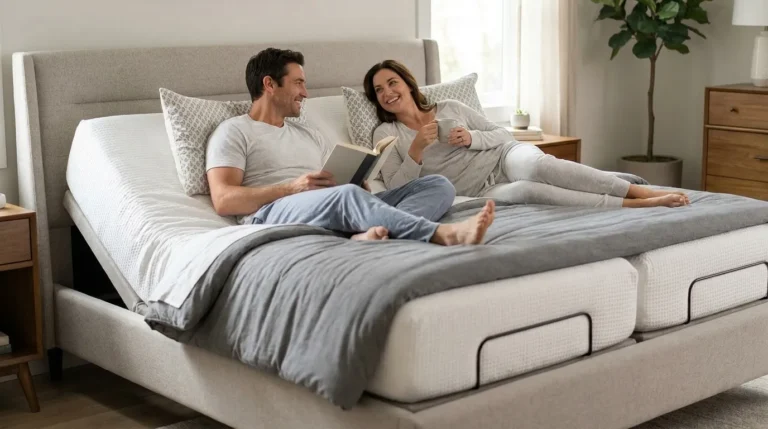
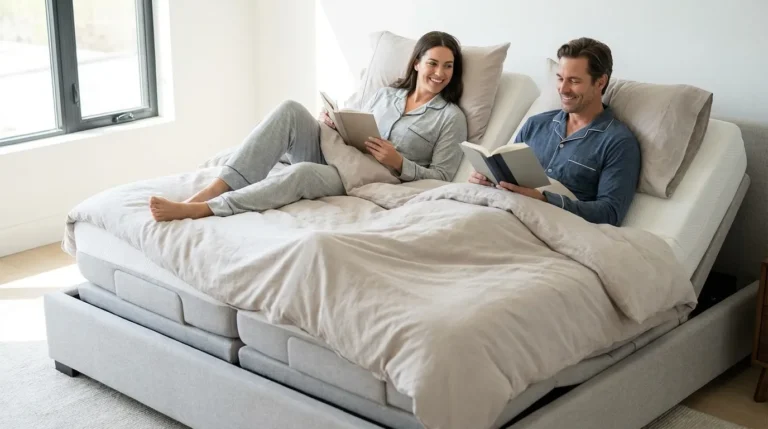
- Couples with differing preferences: Choose a split Queen or split King configuration with independent firmness on each side so neither partner has to compromise.
- Hot sleepers: Choose any latex hybrid with pocketed coils and a breathable wool or organic cotton cover, and prioritise structural airflow over surface gel treatments.
- Those with back, hip, or knee pain: Choose zoned pocketed coils with firmer lumbar zones and softer shoulder zones, paired with adjustable head and foot elevation.
Leva Sleep designs and assembles its adjustable sleep systems locally in Ontario and Alberta, which removes the cross-border markup that can inflate US-import pricing by 30–50%. With over 25,000 customers and $50M in lifetime sales, Leva’s direct-to-consumer model covers the full system, including latex hybrid mattress, adjustable base, split configuration, and purpose-built bedding accessories. For couples who have started sleeping in separate rooms because of snoring, different firmness needs, or medical elevation requirements, Leva’s Split Queen and Split King packages with independent app-controlled bases help each partner sleep comfortably without compromise.
Setup, Ownership, and Day-One Planning
A latex hybrid mattress on an adjustable base creates a heavier, more complex installation than a standard flat bed. At about 120 lbs for a queen size, as noted earlier, split configurations also involve two separate bases that must be aligned precisely. Leva Sleep’s in-house white-glove delivery service handles old bed removal, room-level delivery, full assembly, leg-height adjustment, and a product tutorial, which removes the logistical burden that many “bed in a box” brands leave to the customer.
For long-term ownership, combining a waterproof protector, regular rotation, and a proper foundation can extend mattress life. Leva designs its fitted sheets with deep pockets and extra elastic so they stay in place during adjustable-base articulation, which solves a practical issue that standard bedding often overlooks.
Review Leva’s complete adjustable sleep system packages that bundle the mattress, base, and accessories engineered to work together from day one.
Frequently Asked Questions
What are the disadvantages of a latex hybrid mattress?
Latex hybrids cost more than all-foam or basic innerspring mattresses, with quality Canadian options starting around $1,500 CAD for a queen. They are also heavier than many all-foam models, since a queen size weighs around 120 lbs, which makes setup and rotation more physically demanding. Some sleepers find latex’s buoyant, responsive feel less conforming than thick memory foam, which can be a drawback for those who prefer a deep pressure-cradling sensation. Talalay latex, the softer and more breathable variant, cannot currently receive organic certification under GOLS standards, so buyers who prioritise organic certification must choose Dunlop latex options. Very thick latex hybrids above 14 inches may also resist bending at the hinge point of an adjustable base, so thickness should be confirmed with the manufacturer before purchase.
Are latex hybrid mattresses resistant to bed bugs?
No mattress material is inherently bed-bug-proof, including latex. Bed bugs can inhabit any mattress regardless of construction. However, latex’s dense, non-porous surface offers fewer hiding spots than open-weave fabric covers or loose foam seams. The most effective protection is a fully encasing, zippered mattress protector rated for bed bug resistance, used along with regular inspection of the base and bed frame. Leva Sleep’s mattress protectors are designed specifically for adjustable bases and provide a sealed barrier that standard protectors, which can slip or gap during articulation, do not reliably maintain.
Are there Canadian-made latex hybrid mattresses?
Several Canadian manufacturers produce latex hybrid or all-latex mattresses. Silk and Snow offers an organic latex hybrid assembled in Canada, priced around $1,400 CAD for a queen. Fawcett Mattress produces latex mattresses with Talalay latex layers. Obasan in Ottawa makes GOLS-certified organic Dunlop latex mattresses starting at $2,500–$4,000+ for a queen. Leva Sleep designs and assembles its adjustable sleep systems locally in Ontario and Alberta, which avoids cross-border import costs and allows direct quality control from manufacturing through delivery. Local assembly also supports regional employment without passing extra manufacturing markups on to the customer.
How long does a latex hybrid mattress last?
Quality hybrid mattresses are expected to last 7 to 10 years with proper care, including regular rotation and a waterproof protector. Natural latex’s resilient, open-cell structure returns to its original shape after compression instead of taking a permanent set, which gives it a durability advantage over polyurethane foam. Individually pocketed coils in higher-quality systems also hold up longer than open Bonnell-style coils. Body weight, nightly hours of use, and moisture protection are the main variables that determine where within that range a specific mattress lands.
Can a latex hybrid mattress work on a split adjustable base?
Latex hybrid mattresses can work well on a split adjustable base when they meet specific compatibility criteria. The coil system must use individually pocketed coils rather than connected Bonnell or continuous coils, which resist bending and can deform on an adjustable base. Total mattress height should fall between 10 and 12 inches for optimal articulation, with 14 inches as the practical upper limit. Foam-encased edge support handles repeated bending better than steel-rod perimeters. A split Queen or split King setup uses two separate mattresses, each on its own base, so each partner’s mattress and base can be confirmed for compatibility independently. Leva Sleep’s pocket-coil latex hybrids are engineered specifically for use with Leva’s adjustable bases, including Split Queen and Split King configurations, which removes the compatibility uncertainty that arises when mixing mattresses and bases from different manufacturers.
Conclusion: Why Canadian Couples Choose Latex Hybrids
A latex hybrid mattress addresses core sleep problems many Canadian couples face in 2026, including heat retention, inadequate back support, motion transfer, and adjustable-base incompatibility. The combination of open-cell latex and pocketed coils delivers structural airflow that outlasts surface cooling treatments, zoned support that maintains spinal alignment across sleep positions, and the flexibility needed for split-base articulation. Canadian pricing ranges from about $1,500 CAD for entry-level natural latex hybrids to $3,500+ for premium configurations, while US-imported luxury equivalents often add another 30–50% in cross-border costs. For couples in Ontario and Alberta who want a split-ready system with independent controls, white-glove setup, and direct-to-consumer pricing, compare Leva Sleep’s adjustable latex hybrid packages to find a complete system built for that purpose.