Written by: Matthew Timmins, Founder and Managing Director, Leva Sleep
Key Takeaways
- Pressure relief mattresses reduce pressure points that can cause pain, tossing and turning, and partner disturbance.
- Adjustable beds help support natural spinal alignment, improve comfort, and can ease snoring and mild sleep apnea.
- Split King and Split Queen setups let each partner personalize their position and comfort without compromise.
- Adaptive pressure relief technology can support cardiovascular health, stress reduction, and deeper, more restorative sleep.
- Leva Sleep offers Canadian couples adjustable bed packages and pressure relief mattresses designed to work together, available at Leva Sleep adjustable bed packages.
Why Your Current Mattress Might Be Your Sleep’s Biggest Enemy
Many traditional flat mattresses force your body into awkward positions, which creates pressure points at the hips, shoulders, and lower back. These pressure points can trigger pain, restlessness, and frequent position changes that disturb both partners.
Sleep quality affects long term health. Chronic sleep disturbances link with higher risk of cardiovascular, metabolic, and psychological disorders, so a supportive mattress is more than a comfort upgrade. A pressure relief mattress supports the spine’s natural curve and spreads weight evenly, which reduces those painful hotspots that keep you awake or waking your partner. Some couples even consider separate bedrooms, sometimes called sleep divorce, when their mattress cannot meet both partners’ needs.
Leva Sleep: Adjustable Bed Solutions for Canadian Couples
Leva Sleep focuses on adjustable beds and pressure relief mattresses that support the way real couples sleep. The goal is to give each partner control over comfort without needing separate beds or rooms.
Key features include:
- Split King and Split Queen configurations that let each partner adjust their side independently
- Quiet German motors for smooth, low noise movement at night
- App control with preset positions, including anti snore settings
- Pressure relief mattresses engineered to work effectively with adjustable bases
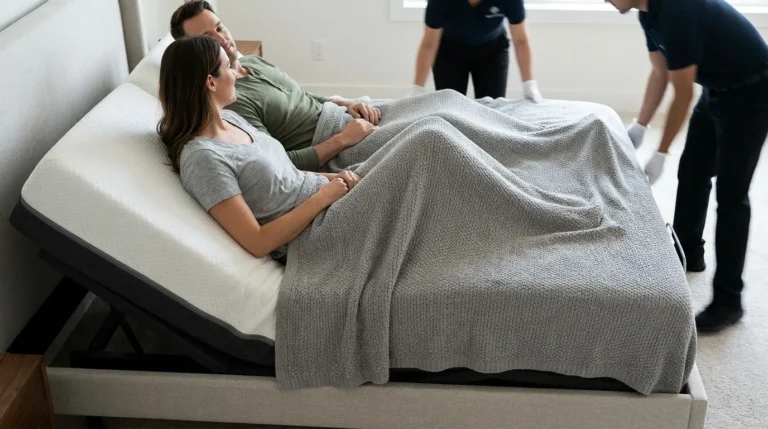
- White glove delivery and setup for an easy start with your new bed
Canadian couples can explore complete packages at Leva Sleep adjustable bed packages.
7 Ways Pressure Relief Mattresses & Adjustable Beds Support Better Sleep
1. Reduce Pressure Points and Ease Chronic Pain
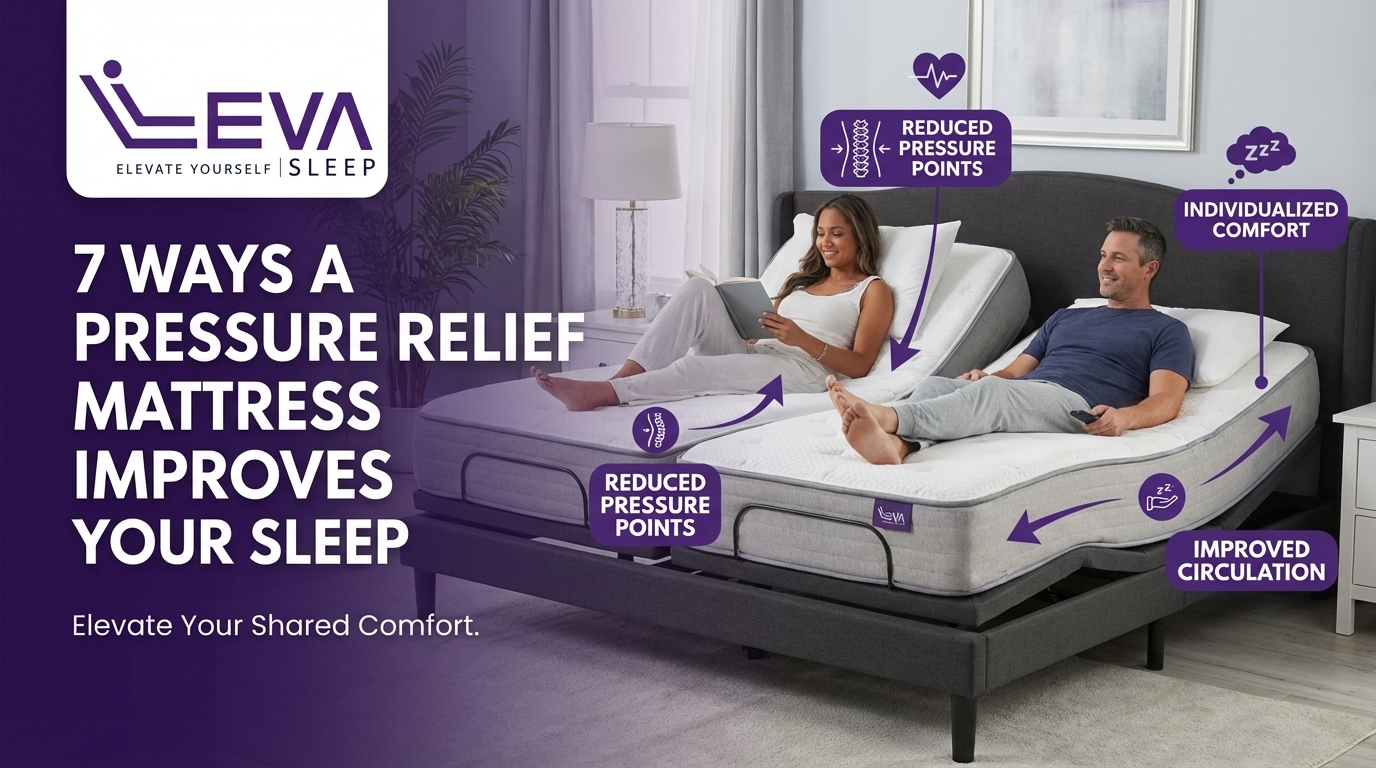
Pressure relief mattresses spread body weight across a larger surface area, so no single point bears too much load. This helps protect sensitive areas like hips, shoulders, and the lower back. Less pressure means fewer position changes and less partner disturbance.
Couples living with arthritis, fibromyalgia, or chronic pain can benefit in particular. Mattresses that support spinal alignment and pressure relief can reduce pain and improve sleep for people with chronic conditions. Leva Sleep offers all foam and hybrid options that contour closely while staying compatible with adjustable bases.
2. Support Healthy Spinal Alignment and Morning Comfort
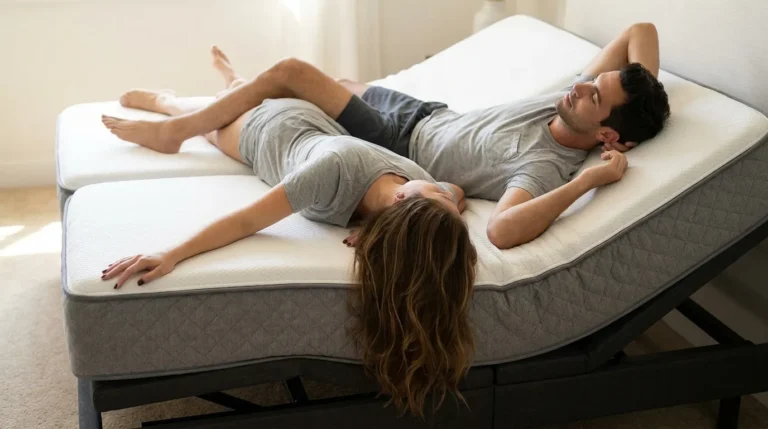
A supportive mattress and adjustable base work together to keep the spine in a neutral position. Good alignment can reduce morning stiffness and help prevent long term postural issues.
Medium firm mattresses often provide an effective balance of support and comfort for most sleepers. With an adjustable bed, you can fine tune head and foot elevation to ease lower back pressure, especially if you spend long periods on your back or side. Leva Sleep offers multiple firmness options so each partner can select a feel that suits their body type.
3. Support Deeper Sleep Stages and Better Recovery
Reduced pressure and better alignment create conditions for deeper, more continuous sleep. Pressure adjusting mattresses, including adjustable air designs, can increase sleep efficiency and the proportion of deep sleep, especially in women.
When sleep becomes more continuous, many people notice steadier daytime energy, clearer thinking, and more stable mood. Consistent, high quality sleep supports cognitive performance, emotional balance, and immune function, which matters for both partners’ daily lives.
4. Ease Snoring and Mild Sleep Apnea with Head Elevation
Adjustable beds give simple, non invasive support for snoring and mild sleep apnea. Elevating the head can open the upper airway, reduce soft tissue collapse, and lessen snoring volume and frequency, which benefits both the snorer and their partner.
Many Leva Sleep bases include an anti snore mode that gently raises the head when snoring is detected. This type of feature can support couples who want to keep sharing a bed while addressing common breathing related sleep issues. Medical guidance remains important for diagnosed sleep apnea, but elevation often complements other treatments.
5. Personalize Comfort So Both Partners Sleep Well
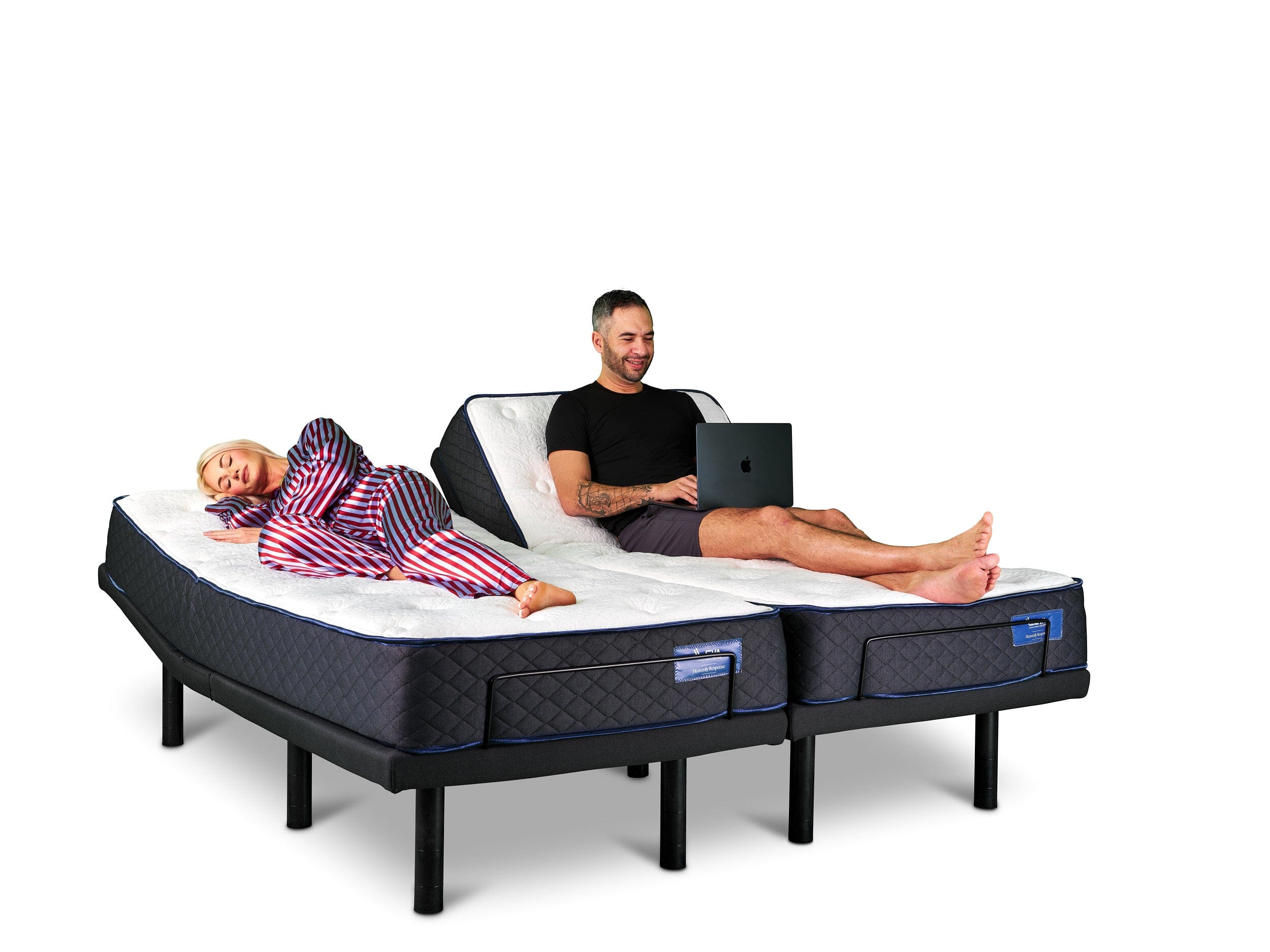
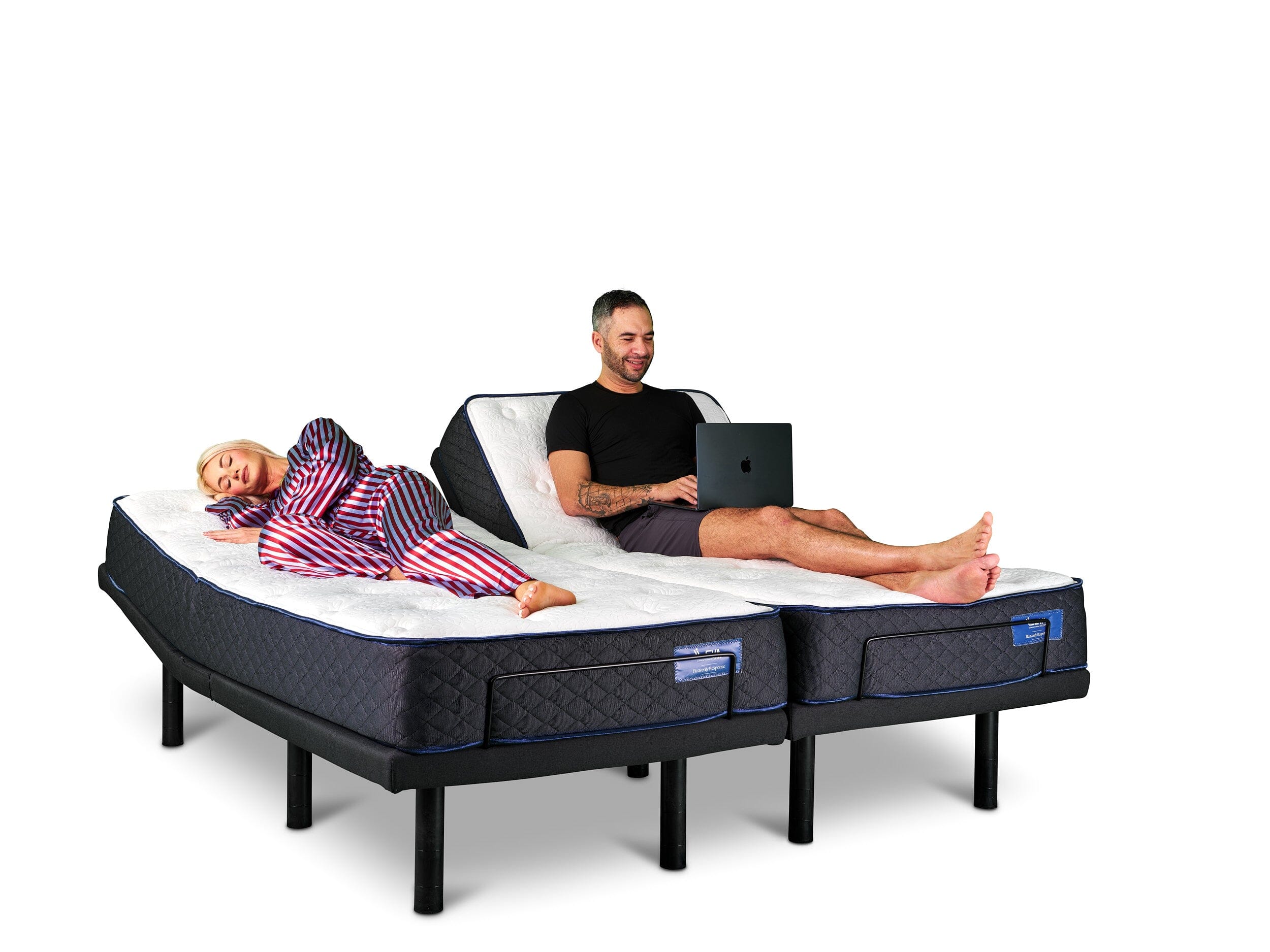
Split King and Split Queen adjustable beds let each partner control their own head and foot height, and in some models, massage settings. One person can recline to read while the other lies flat or rests in a zero gravity position, without affecting the other side.
Leva Sleep places special emphasis on Split Queen designs, which fit standard primary bedrooms while still giving each partner individual control. Canadian couples can review available split configurations at Leva Sleep adjustable bed packages.
6. Support Cardiovascular Health and Lower Physiological Stress
Comfortable, stable support during sleep does more than reduce aches. Auto adjusting air mattresses can reduce cardiovascular sympathetic activity during deep sleep, which points to lower physiological stress at night.
Improved comfort and alignment can contribute to steadier heart rate patterns and better autonomic balance. For couples who track their heart health or manage stress, a pressure relief mattress with an adjustable base becomes part of an overall wellness plan rather than a simple bedroom upgrade.
7. Prepare for Future Needs with Adaptive Technology
Sleep needs change with age, health, and lifestyle. Modern pressure relief mattresses and bases can adapt as those needs evolve. New alternating pressure systems use adaptive mechanisms that reduce prolonged pressure and blood flow restriction, and newer designs are beginning to incorporate sensors and smart controls.
Leva Sleep uses durable components and Canadian made elements in many products, which supports long term reliability. This approach helps couples choose a setup that remains comfortable and supportive for years.
Pressure Relief Mattress Capabilities Comparison
|
Feature |
Leva All Foam Mattress |
Leva Hybrid Mattress |
Traditional Flat Mattress |
|
Pressure Relief |
High contouring and pressure distribution |
Balanced cushioning and support |
Limited pressure reduction |
|
Spinal Alignment |
Adaptive support across the body |
Targeted support zones |
Fixed surface, often uneven support |
|
Motion Isolation |
Strong motion isolation for couples |
Good isolation with added bounce |
Higher motion transfer |
|
Adjustable Base Compatibility |
Designed for full articulation |
Engineered for adjustable frames |
Often incompatible or restricted |
Frequently Asked Questions about Pressure Relief Mattresses for Canadian Couples
How do pressure relief mattresses improve sleep efficiency for couples?
Pressure relief mattresses distribute body weight more evenly and support the spine’s natural curve. This reduces pressure points, so each partner moves less during the night. Fewer sleep disruptions often mean more time spent in deep and REM sleep, which improves overall sleep efficiency.
Can a pressure relief mattress help with sleep apnea, snoring, or chronic pain?
A pressure relief mattress combined with an adjustable bed can ease symptoms for many people who deal with chronic pain, snoring, or mild sleep apnea. Head and leg elevation can support airway openness and circulation, while pressure relief reduces joint and muscle discomfort. Medical advice remains important, but the right setup can make daily management easier.
What materials should Canadian couples look for in a pressure relief mattress?
Common options include memory foam, latex, gel infused foam, and hybrid designs that pair foams with pocketed coils. Couples who sleep warm may prefer breathable hybrids or gel infused foams, while those who prioritize contouring often prefer memory foam or latex. The mattress should flex easily with an adjustable base and offer strong motion isolation so one partner’s movements do not disturb the other.
Do men and women respond differently to pressure relief mattresses?
Some research indicates that women may experience larger improvements in sleep quality and autonomic measures when mattress pressure is optimized. This reinforces the value of mattresses and bases that allow fine adjustments, so each partner can tune comfort to their body type and preferences.
How does a pressure relief mattress and adjustable bed support couples differently than single sleepers?
Couples gain extra benefits from reduced motion transfer, split configurations, and the ability to address different health needs at the same time. One partner may elevate their head to ease snoring, while the other focuses on lower back support, all without compromising each other’s comfort.
Conclusion: A Practical Path to Better Shared Sleep
A pressure relief mattress paired with an adjustable bed gives Canadian couples a practical way to address pain, snoring, and different comfort needs in one shared setup. Better support and customization can lead to more restful nights, steadier energy, and a calmer bedroom environment for both partners.
Leva Sleep focuses on adjustable bed and mattress combinations designed for couples, with split configurations, pressure relief options, and delivery services across Canada. Couples ready to upgrade their shared sleep can review current packages at Leva Sleep adjustable bed packages.