
Written by: Matthew Timmins, Founder and Managing Director, Leva Sleep | Last updated: August 6, 2026
Zero Gravity for Couples: What to Know Before You Start
- The zero gravity bed position elevates the upper body and knees to reduce spinal pressure, ease back or hip pain, and help manage snoring or acid reflux for Canadian couples.
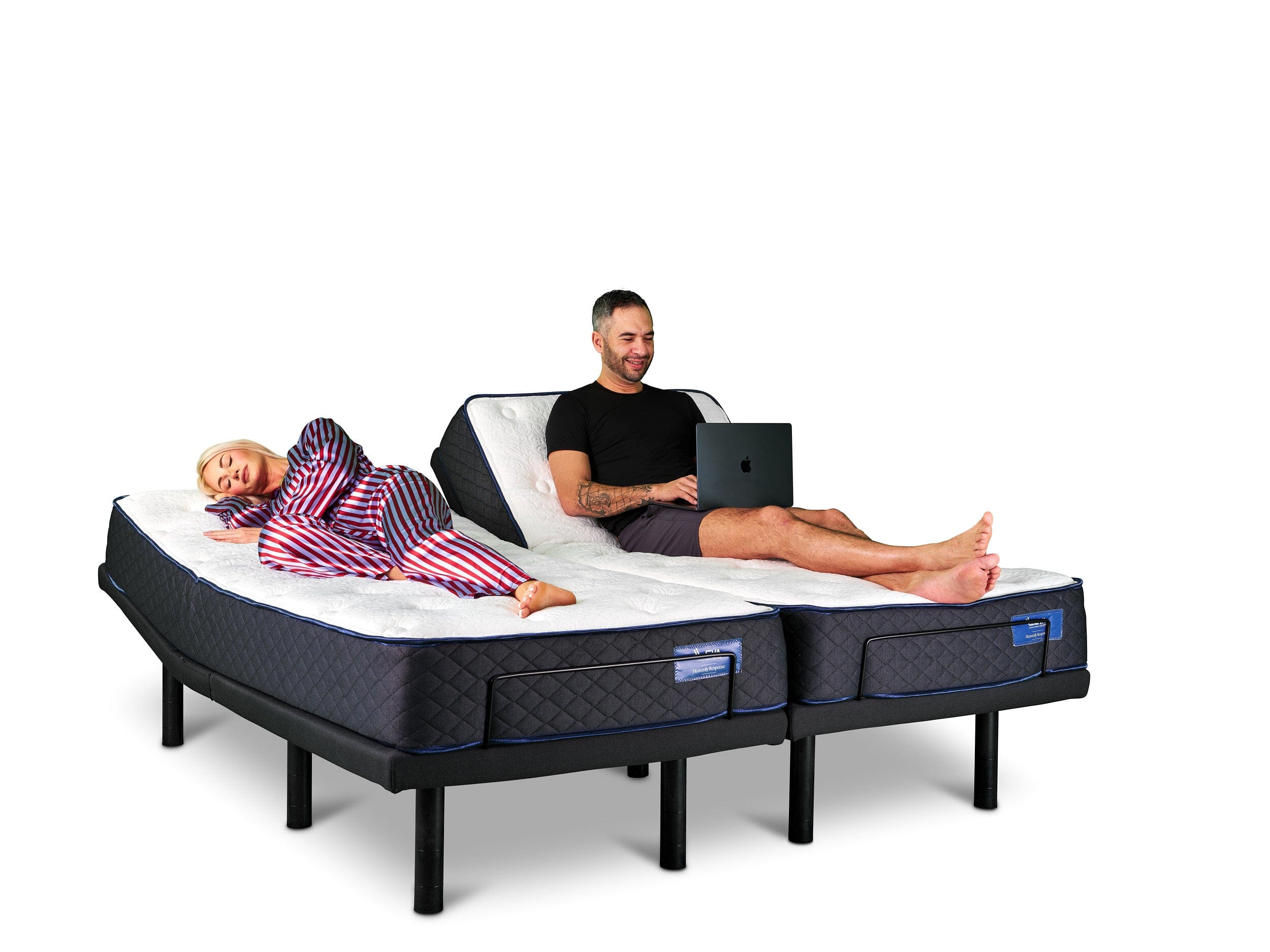
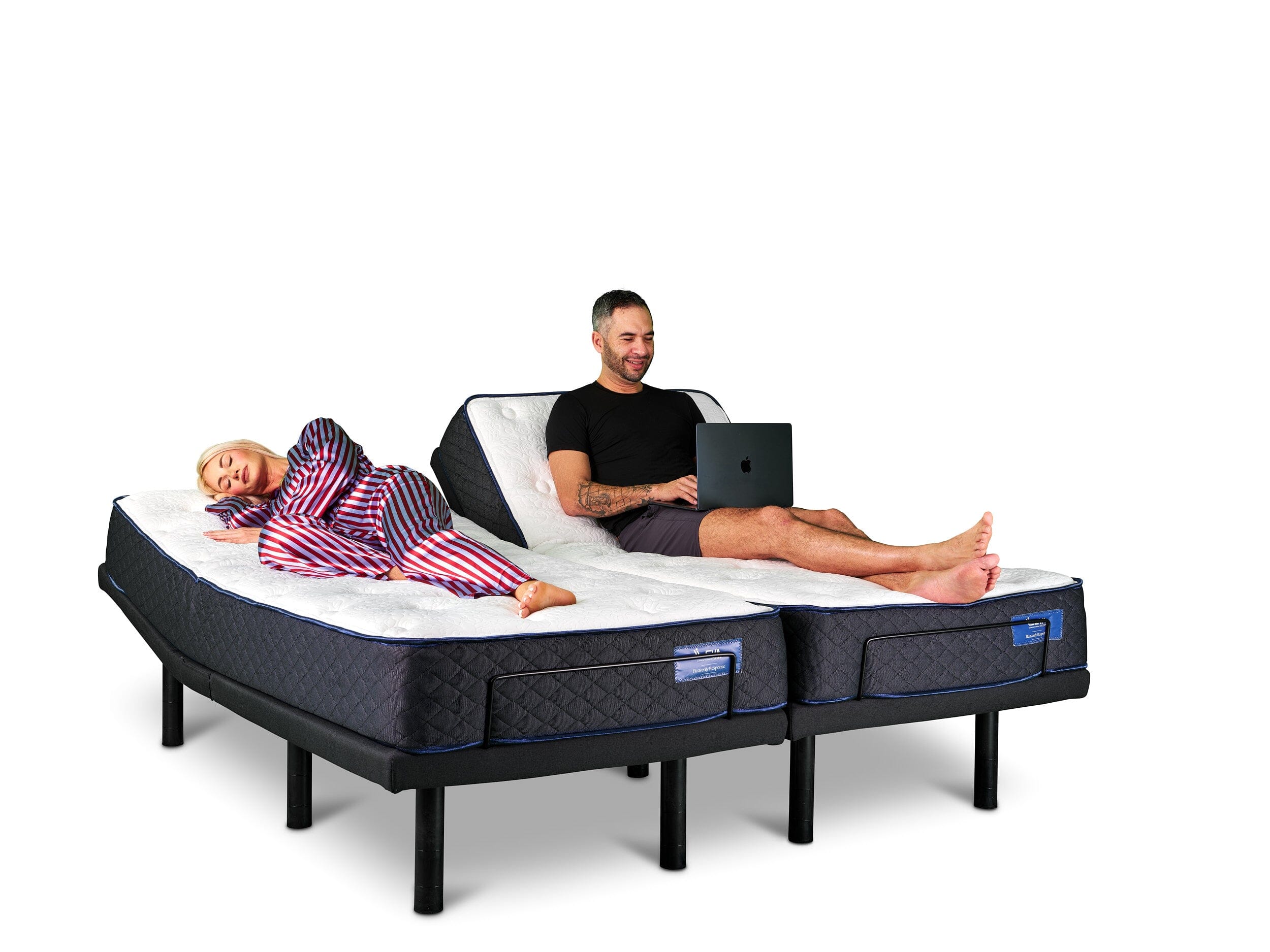
- Each partner often needs different angles, so a split adjustable base is usually the only practical way to get independent zero gravity positioning without compromise.
- Begin with a medical suitability check, then use the base’s zero gravity preset and fine-tune angles gradually while keeping the head section moderate to avoid neck strain.
- Side sleepers, pregnant individuals, and partners with differing firmness needs can adapt the position with small angle changes, knee pillows, or independent mattress selection on a split base.
- Leva Sleep’s split-queen and split-king packages deliver whisper-quiet German motors, app presets, anti-snore mode, and temperature regulation so couples can enjoy personalized zero gravity comfort every night. Explore Leva Sleep’s adjustable bed packages today.
Step 1: Confirm Medical Suitability and Capture Your Baseline
The zero gravity position is safe for most back and side sleepers, but it is not universally appropriate. Conditions including severe glaucoma, advanced arthritis, significant hip stiffness, certain shoulder injuries, and cardiac issues may be aggravated by the posture. Individuals with glaucoma or heart problems should consult a healthcare provider before use. Stomach sleepers should avoid the position entirely, as it would hyperextend the back and cause neck and back pain.
Each partner should complete the following checklist before setup:
- Speak with a family physician or specialist about any cardiac, ocular, joint, or musculoskeletal conditions.
- Record current pain levels (scale of 1–10) at the lower back, hips, and neck on waking.
- Note snoring frequency and any diagnosed sleep apnea severity.
- Identify primary sleep position: back, side, or stomach.
- Confirm preferred mattress firmness and any temperature regulation needs.
These measurements work together as your starting point. They make it easier to see which symptoms improve and help a healthcare provider suggest specific angles if needed.
Step 2: Pick Your Zero Gravity Setup for Two
Most couples reach a zero gravity position with either an adjustable base or a pillow-only approximation using a wedge and a knee pillow.
A pillow-only setup uses a wedge pillow or stacked pillows to elevate the upper body combined with a separate pillow placed under the knees. This approach costs less upfront but cannot match precise angles, tends to shift during the night, and offers no independent control for a partner.
For couples who need different angles throughout the night, those limits make a pillow-only approach impractical. A split adjustable base is the practical solution for couples with differing needs. Couples with differing preferred zero gravity angles can either compromise on a shared angle or use a split king adjustable base for independent control of each side, which also reduces motion transfer. Leva Sleep’s split-queen and split-king bases use quiet German motors, app-controlled presets, and independent remotes so each partner sets their own head and foot elevation without disturbing the other. This setup provides true independent zero gravity positioning in a shared bed.
Compare Leva Sleep split-queen and split-king configurations with independent controls for each partner.
Step 3: Dial In the Exact Zero Gravity Angles
The upper body should rest at a moderate incline while the leg section lifts enough to create a neutral, relaxed posture. Most Leva Sleep bases include a saved zero gravity preset that approximates this position automatically. To fine-tune from the preset, follow these steps:
- Start flat and activate the zero gravity preset.
- Increase torso and leg elevation gradually on separate nights until the position feels slightly too extreme, then reduce slightly to find the personal comfort zone.
- Adjust only the torso angle or only the leg angle at a time, then fine-tune both together.
- Confirm the neck feels supported and the spine feels long and neutral, not compressed at the chin.
- Save the custom position to the app or remote memory for consistent nightly recall.
Avoid over-elevation. Sleep consultant and occupational therapist Annie Schlecht warns that too much elevation, especially at the head, can strain the neck and disrupt breathing. Keep the head section at a moderate angle and use a flat or low-profile pillow to avoid pushing the chin toward the chest.
Step 4: Adjust for Side Sleepers, Pregnancy, and Firmness Differences
Side sleepers need a modified approach. A modest 8–10-degree head tilt combined with about 15 degrees of knee elevation prevents pelvic rotation for side sleepers and should be fine-tuned based on shoulder pressure rather than using the standard back-sleeping zero gravity setup. Placing a pillow between the knees helps keep the hips stacked and prevents forward pelvic rotation that would otherwise twist the spine. The full zero gravity preset works better for short-term relaxation for side sleepers than for all-night use.
Pregnant individuals can benefit from the position’s ability to ease gastro-esophageal reflux and reduce lower-limb edema. However, the ideal posture differs based on individual needs and pregnancy stage, so a healthcare provider should be consulted before all-night use. The American Pregnancy Association recommends left-side sleeping as optimal during pregnancy, so zero gravity positioning is most useful for winding down or managing reflux rather than as a primary all-night posture in later trimesters.
Partners with different firmness preferences can use Leva Sleep’s split bases to combine independent elevation with independently selected mattress firmness on each side. One partner can sleep on an all-foam surface for pressure relief while the other uses a hybrid pocket-coil mattress for more responsiveness, each at their preferred zero gravity angle.
Step 5: Fix Common Issues and Lock In All-Night Comfort
Sliding, sheet movement, pressure points, and neck strain are the most common complaints with all-night zero gravity use. The fixes below work together to keep both partners comfortable through the night.
- Sliding: Reduce the head angle by 3–5 degrees and check the mattress base. A mattress with a non-slip base layer resists sliding during elevation changes and helps keep your body in place.
- Sheet slippage: Standard fitted sheets often pop off on elevated bases. Leva Sleep’s fitted sheets include deep pockets and extra elastic that grip the mattress through the full range of motion.
- Shoulder or hip pressure points: Annie Schlecht recommends giving the body several nights to adapt before making large angle changes. Add a body pillow alongside the torso for side sleepers, or reduce the knee elevation slightly if hip flexor tension develops.
- Neck strain: Use a flat or low-profile pillow in the zero gravity position. This keeps the neck aligned with the spine and preserves the angles you set on the base.
- Remote access during the night: Leva Sleep’s bedding accessories include side remote pockets that keep the wireless remote within reach, so you can adjust positions without searching under pillows.
Use this quick checklist before sleep to support all-night success:
- Zero gravity preset saved and confirmed on both sides of a split base.
- Flat or low-profile pillow in place.
- Adjustable-bed fitted sheet secured at all four corners.
- Remote stored in a side pocket or on the nightstand.
- Anti-snore mode enabled if one partner snores.
Advanced Features That Support Long-Term Couple Use
Temperature regulation matters more in an elevated position because the body’s contact with the mattress surface changes. Leva Sleep’s heating and cooling pad integrates with the adjustable base and can be set independently per side, which helps prevent the late-night overheating that often wakes one partner.
Leva Sleep’s anti-snore mode detects snoring through the base and makes small adjustments to the head section to open the airway. This feature helps couples when one partner’s snoring is the main sleep disruptor and operates quietly so neither partner fully wakes.
Industry analysts project that adjustable bases will become the standard in the North American market as consumers shift from short-term purchases to long-term health investments. Choosing a base with a full feature set now, including independent controls, app connectivity, anti-snore, and temperature regulation, reduces the chance of needing a replacement as health needs change over the next decade.
Explore Leva Sleep split-queen and split-king packages with advanced features designed for long-term couple use.
Frequently Asked Questions
Is it safe to sleep in the zero gravity position all night?
Most back and side sleepers without significant cardiac, ocular, or joint conditions can safely sleep in zero gravity all night when the head section stays at or below 30 degrees and the knee elevation creates a comfortable, natural bend. The position promotes healthy circulation and keeps the spine in a neutral alignment. Stomach sleepers should not use the position, as it hyperextends the spine. Anyone with a pre-existing medical condition should speak with a healthcare provider before adopting the position for all-night use. Movement during sleep is normal and healthy, so shifting off the preset during the night does not cause a problem.
Can side sleepers use the zero gravity bed position?
Side sleepers can use a modified version of the zero gravity position rather than the full preset. A gentle head incline of 8–10 degrees combined with approximately 15 degrees of knee elevation, plus a pillow between the knees to keep the hips stacked, provides most of the circulatory and airway benefits without the spinal rotation risk of steeper angles. Many side sleepers start in a mild zero gravity recline to wind down and then roll onto their side as they fall asleep. The full zero gravity preset, with both head and knees at maximum elevation, suits back sleeping or short-term relaxation for side sleepers.
How long does white-glove delivery take in Ontario and Alberta?
Leva Sleep offers in-house white-glove delivery in Ontario and Alberta. The service includes delivery to the bedroom, full assembly of the adjustable base and mattress, leg height adjustment, a product tutorial covering the app and remote functions, and removal of the old bed through donation or recycling. Delivery timelines vary based on location and current scheduling. Contacting Leva Sleep directly at the time of purchase provides the most accurate estimate for a specific postal code.
Does all-night use affect the warranty on Leva Sleep adjustable bases?
Leva Sleep’s adjustable bases are designed for nightly use. The quiet German motors and precision fabrication support regular all-night operation. Warranty terms are specific to each model and package. Reviewing the warranty documentation included with a purchase or contacting Leva Sleep directly will confirm the exact coverage period and conditions for a chosen base.
Split queen versus split king: which works better for couples?
A split king consists of two twin XL mattresses side by side on two independent bases, totalling 76 inches wide, the same width as a standard king. It is the most common split configuration and offers the widest selection of compatible mattresses and accessories. A split queen consists of two narrower mattresses on two independent bases, totalling 60 inches wide, the same as a standard queen. Leva Sleep is one of the few Canadian retailers that builds split-queen configurations to customer specifications, which makes it a practical choice for couples who want independent controls but have a bedroom that cannot accommodate a king footprint. Both configurations provide fully independent head and foot elevation, firmness selection, and app control per side. The decision comes down to available bedroom space and how much sleeping surface width each partner prefers.
Achieve Better Sleep Together with Leva Sleep
The zero gravity bed position, with the upper body elevated and the knees raised to create a neutral posture, relieves lumbar pressure, reduces snoring, eases acid reflux, and improves overnight circulation. For couples, a split adjustable base with individual controls provides a practical way to achieve and maintain this position independently without compromise or sleep divorce.
Leva Sleep’s split-queen and split-king packages deliver that capability with the same advanced motor technology mentioned earlier, app-controlled presets, anti-snore mode, temperature regulation, and purpose-built bedding at 30–50% less than many comparable luxury competitors. With over 25,000 Canadian customers, $50M in lifetime sales, and in-house white-glove delivery across Ontario and Alberta, Leva Sleep is a specialist partner for couples ready to stop compromising on sleep.
Find your Leva Sleep split configuration that fits your bedroom, budget, and both of your sleep needs.